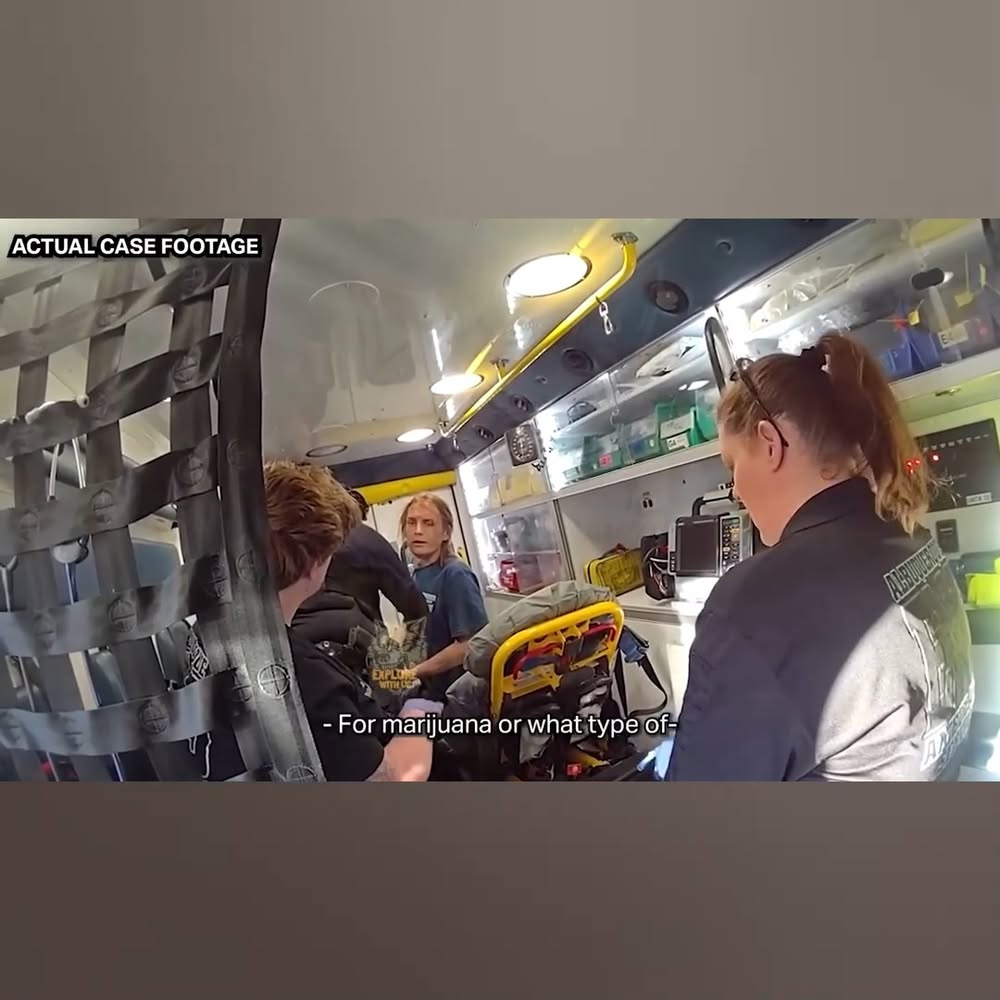



Breaking News: H1702003 Cops Find Mom Alive Knife Stuck in Brain part2 | Talent Frontier
Welcome to our latest coverage on H1702003 Cops Find Mom Alive Knife Stuck in Brain part2 | Talent Frontier. This topic has been trending across social media platforms and sparking conversations worldwide.
In this report, we break down the key details, analyze the footage, and provide you with everything you need to know about this developing story.
✨ Key Highlights
- Viral Content: Experience the moment everyone is talking about regarding H1702003 Cops Find Mom Alive Knife Stuck in Brain part2 | Talent Frontier.
- In-Depth Analysis: A closer look at the details you might have missed.
- Global Impact: How this event is resonating with audiences everywhere.
- Expert Opinions: Insights and reactions from the community.
📊 Detailed Report
Beyond the headlines, this video offers a unique perspective that clarifies the context of the situation. The footage speaks for itself, capturing specific moments that define the narrative.
Observers have noted the significance of these events. Whether you are following this story closely or just tuning in, the video above provides the most accurate visual representation available.
❓ Frequently Asked Questions
1. What is the main focus of this video?
The video focuses on the core events surrounding the title topic, offering real-time footage and context.
2. Where can I find more updates?
Stay tuned to our website for follow-up reports and detailed analysis as this story unfolds.
🎯 Conclusion
We hope this report on H1702003 Cops Find Mom Alive Knife Stuck in Brain part2 | Talent Frontier has kept you informed. Information is power, and staying updated with accurate visuals is more important than ever.
Thank you for reading. Don’t forget to share this article and leave your thoughts in the comments below!
From the Track to the Tarmac: 10 Production Cars Packing Race-Car Heart
For decades, the roar of an engine pushing the limits on a racetrack has captivated audiences. But what if you could capture that raw, unadulterated thrill and bring it directly to your daily commute? As an industry veteran with ten years immersed in the automotive world, I’ve witnessed firsthand the profound impact motorsport has on the vehicles we drive. It’s not just about aesthetics; it’s about the very soul of the machine, the engineering prowess honed in the crucible of competition that finds its way onto public roads. This exploration delves into production vehicles that blur the lines, delivering the visceral experience of race cars for the everyday driver. We’re talking about engines forged in the fires of racing, ready to unleash their potent character on asphalt.
The symbiotic relationship between motorsport and road-going automobiles is an enduring narrative. Race circuits serve as ultimate proving grounds, pushing engineering boundaries under extreme duress where perfection is paramount. The innovations born from this intense environment – from advanced aerodynamic principles and the strategic use of lightweight materials to sophisticated powertrain technologies – invariably trickle down, enhancing the vehicles we encounter on our streets. Consider the widespread adoption of disc brakes and paddle shifters; these were once exclusive to the realm of racing before becoming standard features. Furthermore, the prestige associated with motorsport success significantly amplifies a manufacturer’s brand appeal. A dominant presence on the track naturally translates into a heightened desirability for their consumer vehicles. While few will ever pilot a Formula 1 challenger or a Le Mans prototype, the allure of connection to that world is palpable, particularly when a race-bred engine pulses beneath the hood of a production car. This philosophy, often encapsulated by the adage “Win on Sunday, Sell on Monday,” is experiencing a powerful resurgence, injecting unprecedented vitality into the automotive industry.
The Engineering Crossover: Why Race Tech Matters for Your Ride
The pursuit of victory in motorsport compels manufacturers to push engineering to its absolute limits. Every component, from the smallest bolt to the most complex aerodynamic surface, is scrutinized and refined to shave off milliseconds and gain crucial advantages. This relentless drive for improvement has a direct and significant impact on the cars we purchase.
Aerodynamics: Concepts like downforce generation, drag reduction, and airflow management, perfected on the racetrack to enhance stability and speed, are now integral to the design of modern road cars, improving fuel efficiency and high-speed handling.
Materials Science: The need for lightweight yet incredibly strong components in racing has accelerated the development and adoption of advanced materials like carbon fiber composites, aluminum alloys, and high-strength steel. These materials not only make race cars faster but also contribute to the safety and efficiency of production vehicles.
Powertrain Innovation: The relentless quest for more power, better efficiency, and greater reliability in racing engines leads to breakthroughs in combustion technology, turbocharging, engine management systems, and hybridization. These advancements ultimately find their way into the engines that power our daily drivers, offering increased performance and improved fuel economy.
Braking and Suspension Systems: Technologies like anti-lock braking systems (ABS), traction control, and sophisticated multi-link suspension setups, refined through years of racing, have become standard safety and performance features in everyday cars.
Beyond the tangible engineering benefits, motorsport also serves as a powerful marketing tool. The emotional connection and excitement generated by racing championships translate into brand loyalty and aspirational purchasing decisions. When a manufacturer’s race car triumphs, it imbues their entire product line with an aura of performance, reliability, and cutting-edge technology. This psychological impact is undeniable, influencing consumer perceptions and driving demand for vehicles that embody the spirit of competition. The “Win on Sunday, Sell on Monday” strategy is far more than a slogan; it’s a proven pathway to market dominance, fostering innovation and delivering exceptional vehicles to the public.
Let’s delve into some of the most compelling examples of production cars that have inherited the DNA of their racing brethren, offering a taste of motorsport exhilaration for the discerning driver.
Iconic Machines: 10 Production Cars with True Motorsport DNA
The automotive landscape is rich with vehicles that transcend mere transportation, offering a direct lineage to the world of competitive motorsport. These are not simply cars with racing stripes; they are machines whose very hearts were forged in the heat of competition, designed to conquer circuits and then adapted, with meticulous care, for the asphalt ribbon of public roads. As an industry expert, it’s always thrilling to examine these exceptional examples that embody the “race on Sunday, drive on Monday” ethos.
Alfa Romeo Montreal: A V8 Symphony from the Endurance Circuit
The Alfa Romeo Montreal stands as a testament to Italian passion and engineering brilliance. Nestled beneath its captivating, wedge-shaped bodywork resides a 2.6-liter Tipo 33 naturally aspirated V8 engine. This powerplant wasn’t born in a vacuum; it was directly derived from Alfa Romeo’s formidable Tipo 33 sports prototype, a legendary contender in grueling endurance races like the Targa Florio and the 24 Hours of Daytona. While detuned for civilian duty, this V8 retained its motorsport character, capable of a spirited 7,000 RPM redline and producing a healthy 200 horsepower. The symphony produced by its V8, combined with its striking aesthetics, cemented the Montreal’s status as one of Alfa Romeo’s most distinctive and undeniably cool offerings, a true gem of its era.
BMW M1, M3 (E30), M5 (E28), M6 (E24): The M Division’s Racing Pedigree
BMW’s M division, synonymous with high-performance driving, has consistently imbued its production cars with race-derived technology. The iconic BMW M1, a mid-engined masterpiece, was powered by the formidable 3.5-liter M88 inline-six engine, a unit born from the brand’s intensive racing programs, notably the one-make M1 ProCar series. This same potent engine later found its way into the E24 M6 and the E28 M5, solidifying its reputation as a robust and exhilarating powerplant. The legendary E30 M3, a touring car racing icon, featured the compact yet potent four-cylinder S14 engine. This engine’s design was heavily influenced by the M88 and the turbocharged M12 Formula 1 engines, drawing directly from BMW’s triumphant involvement in DTM (Deutsche Tourenwagen Masters) racing, sharing crucial components and engineering principles with the cars that dominated the series. The influence of racing is undeniable in these Bavarian titans.
Chevrolet Camaro ZL1 (1969): The Can-Am Beast Unleashed
The 1969 Chevrolet Camaro ZL1 was more than just a muscle car; it was a road-legal weapon. Its heart was a colossal 427 cubic-inch (7.0-liter) V8 engine, originally conceived for the brutal world of Can-Am racing. Constructed entirely from lightweight aluminum, this engine was remarkably potent for its displacement, producing a claimed 430 horsepower for street use, though its true output was closer to 500 hp in race trim. The ZL1 package transformed the Camaro into a drag strip dominator, and its potent engine lived on to compete successfully in the SCCA Trans-Am series. With a production run of only 69 units, the 1969 Camaro ZL1 remains an exceptionally rare and highly coveted automotive icon, a genuine piece of American racing history available for road enthusiasts.
Ferrari Dino 206 GT: A Taste of Formula 2 Excellence
While not bearing the iconic Prancing Horse badge on its exterior, the Ferrari Dino 206 GT was a pivotal machine in Maranello’s history, and its engine bore distinct motorsport connections. It featured a sophisticated 2.0-liter Dino naturally aspirated V6 engine, a powerplant originally developed for Ferrari’s Formula 2 racing efforts in the 1960s. Despite being calibrated for road use, this V6 retained its eager, high-revving nature, imbuing the Dino with a palpable racing spirit that made it an absolute joy on winding roads. Producing 180 horsepower, it was more than adequate for a car weighing just over 2,000 pounds. The Dino 206 GT marked Ferrari’s initial foray into mid-engined V6 sports cars, setting a crucial precedent for future, legendary models and offering a tangible connection to F2 racing technology.
Ferrari F50: Formula 1 DNA on the Road
Created to commemorate Ferrari’s 50th anniversary, the F50 represented an audacious leap in bringing race-car engineering directly to a production vehicle. Its 4.7-liter Tipo F130B naturally aspirated V12 engine was a direct descendant of the powerplant that propelled the 1990 Formula 1 car, the Tipo 641 (also known as the F1-90), piloted by legends like Alain Prost. This naturally aspirated masterpiece could scream to an astonishing 8,500 RPM, unleashing 513 horsepower and delivering an unfiltered sensory experience akin to piloting an F1 car. With minimal modifications to comply with road regulations, the F50 offered the closest possible street-legal approximation of a Formula 1 machine available at the time, a truly visceral connection to Grand Prix racing.
Ford GT: A Modern Homage to Le Mans Glory
The Ford GT is a contemporary reimagining of one of the most storied race cars in automotive history: the legendary, Le Mans-winning Ford GT40. The 2005 iteration of the GT was propelled by a 5.4-liter supercharged V8 engine. Its roots were deeply entwined with the development of Ford’s endurance racing powertrains, showing a clear kinship with the engines used in Ford’s Daytona Prototype race cars. Similarly, the significantly updated 2017 Ford GT continues this proud tradition, featuring a twin-turbocharged 3.5-liter EcoBoost V6 engine. This powerplant is a direct beneficiary of Ford’s extensive experience in endurance racing, showcasing the continuous evolution of race-bred technology into high-performance road vehicles. The Ford GT embodies the spirit of competition, offering a driving experience that echoes its legendary racing heritage.
Jaguar XJ220: The Twin-Turbo V6 Speed King
The Jaguar XJ220, a halo car for the British marque, remains one of the most iconic supercars ever produced. While initially conceived with a V12 engine, it ultimately housed a potent 3.5-liter twin-turbocharged V6. This engine was not a conventional road-car unit; it was sourced directly from the Jaguar XJR-11 Group C race car, a formidable competitor on the world sports car stage. This race-proven powerhouse enabled the XJ220 to achieve a breathtaking top speed of 217 mph, briefly crowning it the fastest production car globally. The XJ220’s engine represented a remarkable instance of advanced, track-honed technology finding its way into a road-legal machine, delivering unparalleled performance for its era.
Plymouth Belvedere (1964): The “Race Hemi” Muscle
At first glance, the 1964 Plymouth Belvedere might not immediately scream “race car.” However, beneath its unassuming exterior lay the legendary 426 Hemi V8 engine, a powerplant meticulously engineered for the demanding world of NASCAR. Dubbed the “Race Hemi,” this engine was an unstoppable force on the oval tracks, and its potent performance quickly necessitated its inclusion in Plymouth’s production vehicle lineup. The road-going Belvedere, boasting 425 horsepower, rapidly established itself as one of the most powerful muscle cars of the 1960s, a reputation that persisted well into the 1970s, exemplified by its iconic ‘Cuda successors. The Belvedere stands as a prime example of how racing dominance directly translated into exhilarating street performance.
Porsche 918 Spyder: Hybrid Supercar with a Racing Heart
The Porsche 918 Spyder stands as a marvel of modern automotive engineering, blending hybrid technology with a potent race-derived V8. Its 4.6-liter V8 engine draws heavily from the RS Spyder, a prototype race car that campaigned successfully in the LMP2 class at the prestigious 24 Hours of Le Mans. In the 918 Spyder, this competition-honed V8 is augmented by electric motors, propelling the car to a staggering combined output of 887 horsepower. This phenomenal power allows the 918 Spyder to achieve 0 to 60 mph in an astonishing 2.2 seconds, placing it among the quickest production cars ever conceived. While the electric motors contribute significantly to its acceleration, it is the race-derived V8 that provides the visceral auditory and emotional thrills, connecting the driver directly to Porsche’s racing heritage. Discussions around hybrid supercar performance and next-generation Porsche models are hot topics for enthusiasts and industry watchers.
Porsche Carrera GT: An Analog Supercar Born from Racing Ambition
The Porsche Carrera GT is widely celebrated as one of the greatest analog supercars ever constructed, and its legend is intrinsically linked to its extraordinary ten-cylinder engine. This 5.7-liter V10 powerplant was initially developed with Formula 1 ambitions during the V10 era. When those plans didn’t materialize, the engine was shelved, only to be later repurposed for a Le Mans prototype car that never saw competitive action. Instead, Porsche decided to transplant this race-honed engine into its flagship supercar. This decision endowed the Carrera GT with a formidable 612 horsepower and an incredible ability to rev to 8,000 RPM. Combined with its lightweight construction and pure motorsport DNA, the Carrera GT remains a challenging and profoundly rewarding supercar to drive, a true driver’s car that demands and rewards engagement. The cost of supercars and performance car reviews often highlight vehicles like the Carrera GT as benchmarks.
These ten vehicles are more than just automobiles; they are rolling testaments to the enduring power of motorsport innovation. They offer a tangible connection to the thrill of competition, allowing drivers to experience the performance and engineering prowess honed on the world’s most demanding circuits. The pursuit of performance tuning and the appreciation for vintage racing cars continue to fuel the passion for these exceptional machines.
If the allure of race-bred performance has ignited your interest, there are numerous pathways to explore. Whether you dream of owning a piece of motorsport history, understanding the intricacies of high-performance engineering, or simply seeking a driving experience that transcends the ordinary, the automotive world offers incredible opportunities. Consider exploring specialist dealerships for used performance cars, engaging with online forums dedicated to automotive history and engineering, or even attending track day events to experience these machines in their element. Your next thrilling automotive adventure awaits.