


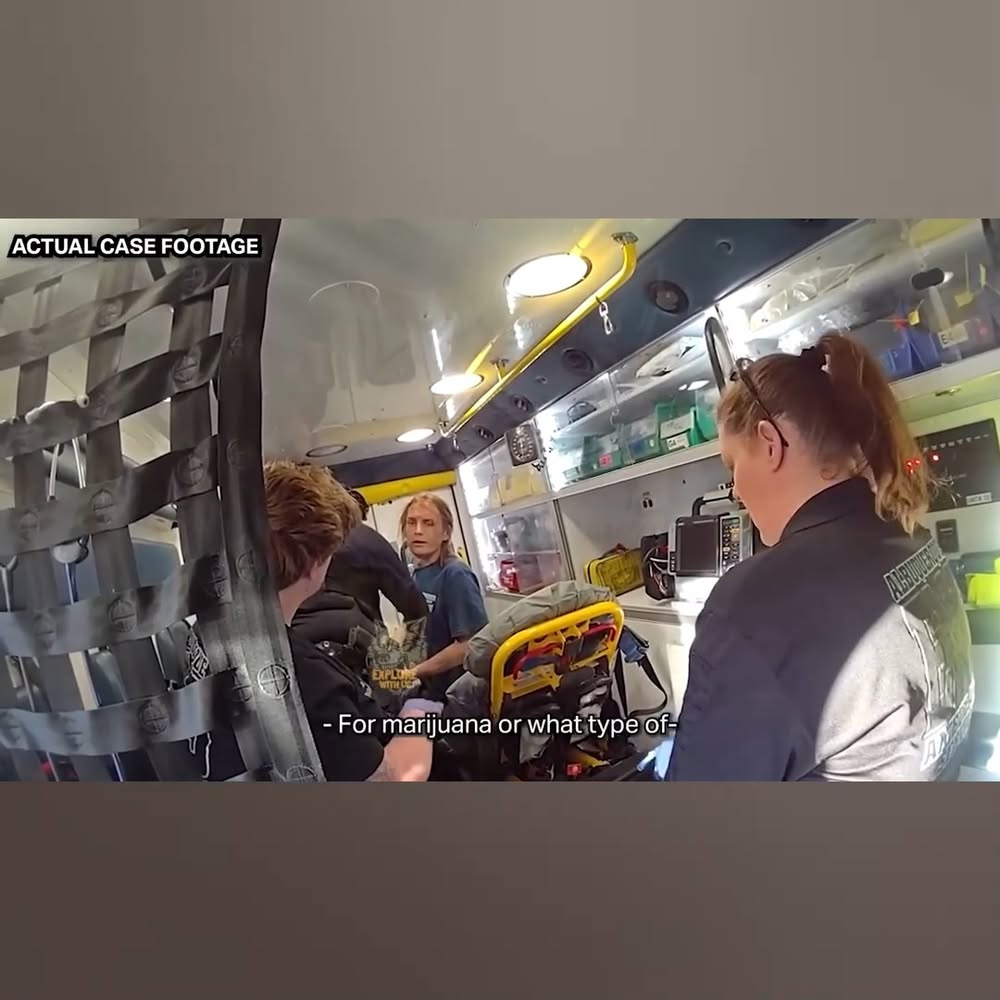
Must Watch: H2102001 Man Attacks Year Old, Crowd Instantly Fights Back part2 | Talent Frontier
This is the video that has captured the internet’s attention: H2102001 Man Attacks Year Old, Crowd Instantly Fights Back part2 | Talent Frontier. If you haven’t seen it yet, you are in for a treat.
We have curated this content specially for our viewers, ensuring you get the best quality and the most entertaining moments right here.
✨ Why You Should Watch
- Entertainment Value: Top-tier content related to H2102001 Man Attacks Year Old, Crowd Instantly Fights Back part2 | Talent Frontier.
- Unique Moments: Scenes that you won’t find anywhere else.
- High Quality: Curated for the best viewing experience.
- Trending Topic: Join the thousands who are watching this right now.
📊 The Full Story
Content like this brings communities together. It allows us to share a laugh, a moment of awe, or a new discovery. The creators have done an amazing job capturing the essence of the subject.
As you watch, pay attention to the details. It’s often the small things that make these videos go viral and stay memorable for a long time.
❓ Common Questions
1. Why is this trending?
Due to its engaging nature and high relevance to current interests.
2. Can I share this?
Absolutely! We encourage you to share this page with friends and family so they can enjoy it too.
🎯 Wrap Up
That’s a wrap on H2102001 Man Attacks Year Old, Crowd Instantly Fights Back part2 | Talent Frontier. We hope you enjoyed watching it as much as we enjoyed sharing it with you.
Bookmark our site for your daily dose of viral videos and entertainment. See you next time!
Born on the Track, Unleashed on the Street: 10 Production Cars Powered by Motorsport Engines
For automotive enthusiasts, there’s an undeniable allure to vehicles that carry the DNA of the racetrack. It’s not merely about aggressive styling or enhanced suspensions; it’s about the very heart of the machine – an engine forged in the crucible of motorsport competition, now breathing life into a road-going machine. These powerplants, honed through relentless testing and the pursuit of victory, offer a visceral connection to the machines that conquer circuits worldwide, translating raw, high-revving performance and adrenaline-pumping dynamics to the everyday commute.
In this deep dive, we explore ten production automobiles that masterfully blur the lines between dedicated race cars and the vehicles we can legally drive on public roads. From the exhilarating crescendo of naturally aspirated V12s to the potent thrust of turbocharged powerhouses, these ten exemplars deliver a tangible taste of motorsport prowess, making the dream of race car performance accessible. But before we celebrate these mechanical marvels, let’s examine the compelling rationale behind why automotive manufacturers invest so heavily in the high-stakes, costly world of motorsport, and how those investments ultimately trickle down to benefit the average consumer.
The Symbiotic Relationship: Motorsport DNA in Road-Going Vehicles
The profound connection between motorsport and road-going automobiles is a narrative as old as the automobile itself. Racing serves as the ultimate proving ground, pushing the absolute boundaries of engineering, subjecting vehicles and their components to extreme conditions where even the slightest deficiency can spell defeat. The invaluable lessons learned on the unforgiving tarmac inevitably find their way into the cars we pilot daily. This technological transference manifests in myriad ways, from the sophisticated advancements in aerodynamics and the strategic utilization of lightweight materials to the direct trickle-down of engine technology. Ultimately, the relentless pursuit of innovation forged in the heat of competition paves the way for more refined, capable, and exhilarating road cars for everyone.
Consider, for instance, the widespread adoption of technologies like disc brakes and paddle shifters, innovations that originated in the high-pressure environment of racing before becoming standard features in a vast array of production vehicles. Beyond pure engineering advancements, motorsport success serves as a powerful catalyst for brand enhancement. When a manufacturer’s race car dominates the competition, its road-going counterparts are perceived as inherently more desirable and performance-oriented. While the vast majority of us will never have the opportunity to pilot a Formula 1 machine or a Le Mans prototype, the presence of a race-bred engine roaring beneath the hood of our personal vehicles allows us to vicariously experience a piece of that electrifying action, fostering a profound emotional connection to the brand and its racing heritage. This strategic application of the “Win on Sunday, Sell on Monday” philosophy is experiencing a robust resurgence in the automotive industry, arguably marking one of the most positive developments for the sector in decades.
Alfa Romeo Montreal: A V8 Symphony from the Track
The Alfa Romeo Montreal stands as a testament to Italian engineering flair and a bold embrace of motorsport heritage. Nestled beneath its striking design lies a potent 2.6-liter Tipo 33 V8 engine, a powerplant directly derived from Alfa Romeo’s formidable Tipo 33 sports prototype. This endurance racing legend competed fiercely in prestigious events such as the Targa Florio and the grueling 24 Hours of Daytona, pushing the limits of automotive endurance. While meticulously detuned for the demands of public roads, the engine in the Montreal retains a significant portion of its racing pedigree. It enthusiastically revs to an impressive 7,000 RPM, delivering a spirited 200 horsepower. The resonant roar of its V8, combined with its undeniably sharp and distinctive styling, firmly established the Montreal as one of the most captivating and remarkably underrated vehicles to ever bear the esteemed Alfa Romeo badge.
BMW’s M Division: Purity of Performance Rooted in Racing
BMW’s storied M division stands as a beacon of performance, and its iconic models are profoundly influenced by the brand’s extensive racing pedigree. The BMW M1, in particular, embodies this ethos, propelled by the robust 3.5-liter M88 inline-six engine. This powerplant was directly born from BMW’s dedicated racing programs, most notably finding its purpose in the M1 ProCar series. Subsequently, this potent engine found its way into the revered E24 M6 and the formidable E28 M5, cementing their legendary status. Furthermore, the four-cylinder S14 engine powering the E30 M3 was also intrinsically linked to the M88 and the turbocharged M12 Formula 1 engines. Its design drew heavy inspiration from BMW’s highly successful touring car racing endeavors, sharing critical components and engineering principles with the machines that dominated the Deutsche Tourenwagen Masters (DTM) championship.
Chevrolet Camaro ZL1: A Can-Am Beast Unleashed
The 1969 Chevrolet Camaro ZL1 is a legend in American automotive history, a muscle car that transcended its peers thanks to an engine originally conceived for the raw, unadulterated world of Can-Am racing. This powerhouse was a 427 cubic-inch (7.0-liter) V8, distinguished by its all-aluminum construction. This innovative material choice made the engine remarkably light for its substantial displacement, contributing to its awe-inspiring performance. While the racing version churned out an estimated 500 horsepower, the road-going ZL1 was conservatively rated at 430 horsepower to meet emissions and drivability standards. The ZL1 package transformed the already potent Camaro into a street-legal drag strip dominator. Its formidable engine continued its racing legacy, finding a home in several potent contenders in the SCCA Trans-Am series. With a mere 69 examples ever produced, the Camaro ZL1 remains an exceptionally rare and highly coveted collector’s item in today’s automotive landscape. For those seeking a glimpse into this era of raw power, searching for “classic muscle car engines” or “historic racing V8s” can illuminate the incredible engineering feats of the time.
Ferrari Dino 206 GT: The Genesis of a Mid-Engine V6 Legacy
The Ferrari Dino 206 GT, while not bearing the iconic Prancing Horse on its exterior, holds a significant place in Ferrari’s lineage, largely due to its innovative V6 engine. This 2.0-liter naturally aspirated V6 was originally developed for Ferrari’s Formula 2 racing efforts in the 1960s. Though its output was calibrated for road use, the engine retained its exhilarating high-revving character, imbuing the Dino with a distinct racing spirit that made it an absolute joy to navigate on winding country roads. Producing a healthy 180 horsepower, this was more than adequate for a car weighing just over 2,000 pounds. The Dino marked a pivotal moment for Ferrari, representing their first foray into mid-engine V6 sports cars, a configuration that would define many future legendary models from the Maranello-based marque. Examining “early Ferrari V6 engines” reveals the technical sophistication that paved the way for future performance innovations.
Ferrari F50: Formula 1 Direct from Maranello
Created to commemorate Ferrari’s 50th anniversary, the Ferrari F50 represents an audacious leap in translating Formula 1 technology directly to a production road car. Its heart is a phenomenal 4.7-liter Tipo F130B V12 engine, which was a direct descendant of the 1990 Formula 1 car, the Tipo 641, famously piloted by legendary racers like Alain Prost. This naturally aspirated masterpiece screams to an astonishing 8,500 RPM, unleashing a formidable 513 horsepower. The F50 offers an unfiltered, visceral connection to the raw power and exhilarating feel of an F1 car. With minimal modifications necessary to comply with road regulations, the F50 stands as arguably the closest a street-legal Ferrari has ever come to replicating the authentic Formula 1 experience. For collectors and enthusiasts, the F50 is a prime example of “hypercar engineering derived from F1,” a testament to the ultimate expression of automotive performance.
Ford GT: A Modern Homage to Le Mans Glory
The Ford GT serves as a powerful modern homage to one of the most legendary race cars in history: the Le Mans-winning Ford GT40. The 2005 iteration of the GT is powered by a 5.4-liter supercharged V8 engine, whose development is deeply rooted in the automaker’s extensive endurance racing engine programs, sharing a lineage with the powerplants used in Ford’s Daytona Prototype race cars. Similarly, the contemporary 2017 Ford GT continues this tradition of motorsport-inspired performance. It is equipped with a potent twin-turbocharged 3.5-liter V6 engine derived directly from Ford’s highly successful EcoBoost program, which has seen extensive application and triumph in endurance racing. The Ford GT epitomizes the pursuit of “performance car engineering for road and track,” showcasing how racing technology directly benefits consumer vehicles.
Jaguar XJ220: Record-Breaking Speed from the Track
The Jaguar XJ220 remains an icon of British automotive engineering and a benchmark for supercar performance. While initially envisioned with a V12 engine, its production version debuted with a groundbreaking 3.5-liter twin-turbocharged V6 engine, directly sourced from the formidable Jaguar XJR-11 Group C race car. This race-proven powerplant was instrumental in propelling the XJ220 to a breathtaking top speed of 217 mph, making it the fastest production car in the world for a significant period. The engine found in the XJ220 represented one of the most advanced and track-tested units ever to find its way into a road-legal automobile. Its legacy is deeply intertwined with “cutting-edge automotive technology from racing,” demonstrating the tangible benefits of motorsport development.
Plymouth Belvedere: The Hemi’s NASCAR Dominance
The 1964 Plymouth Belvedere might not immediately strike one as a race car at first glance, but beneath its unassuming exterior beat the heart of a legend: the 426 Hemi V8. This engine was meticulously developed with NASCAR racing squarely in its sights. Dubbed the “Race Hemi,” this powerplant proved to be an utterly dominant force on the racetrack, and its success quickly led to its integration into Plymouth’s production vehicle lineup. The road-going Belvedere, boasting a formidable 425 horsepower, quickly established itself as one of the most powerful muscle cars of the 1960s, a reputation that the brand carried forward into the 1970s with its legendary ‘Cuda. The Hemi engine remains a symbol of “American muscle car heritage and racing pedigree,” showcasing the raw power that can be homologated for street use.
Porsche 918 Spyder: Hybrid Performance with a Racing Soul
The Porsche 918 Spyder represents a revolutionary step in hybrid hypercar performance, its 4.6-liter V8 engine drawing direct inspiration from the RS Spyder, a highly successful prototype race car that competed in the demanding LMP2 class at the 24 Hours of Le Mans. The 918 masterfully integrates this competition-derived V8 with advanced electric motors to deliver a staggering combined output of 887 horsepower. This remarkable power unit enables the hypercar to achieve a blistering 0 to 60 mph sprint in a mere 2.2 seconds (according to independent testing), positioning it among the quickest production vehicles ever created. While the electric motors contribute significantly to its acceleration, it is the race-derived V8 that provides the car’s distinctive emotional resonance and exhilarating auditory character. The 918 Spyder is a prime example of “hybrid powertrain innovation in hypercars,” demonstrating how cutting-edge race technology can redefine performance boundaries.
Porsche Carrera GT: Analog Supercar Purity
The Porsche Carrera GT is widely regarded as one of the greatest analog supercars ever conceived, and a significant part of its legendary status is attributed to its extraordinary ten-cylinder engine. This 5.7-liter V10 powerplant was initially developed for the pinnacle of motorsport: Formula 1, during the V10 engine era. When that project didn’t materialize as planned, the engine was shelved, only to be later considered for a Le Mans prototype car that, ultimately, never made it to the track. Instead, Porsche made the inspired decision to integrate this race-honed engine into its flagship supercar. This allowed the Carrera GT to produce an awe-inspiring 612 horsepower and rev with unbridled enthusiasm all the way to 8,000 RPM. Coupled with its remarkably lightweight construction and its deeply ingrained motorsport DNA, the Carrera GT remains one of the most engaging and challenging supercars to master, offering an unparalleled driving experience for those seeking genuine “analog supercar performance.”
Embracing the Thrill of the Race-Inspired Drive
These ten exceptional vehicles are more than just modes of transportation; they are rolling testaments to the enduring power of motorsport and its profound impact on the automotive landscape. Each one offers a unique opportunity to experience the thrill and performance born from the world’s most demanding racetracks, bringing a piece of that competitive spirit directly to the public roads.
If the idea of owning or experiencing a car with genuine motorsport heritage ignites your passion, now is the perfect time to explore the possibilities. Delve deeper into the specifics of these incredible machines, research available models, and perhaps even arrange a test drive. Your journey into the exhilarating world of race-bred production cars begins with a single, informed step.