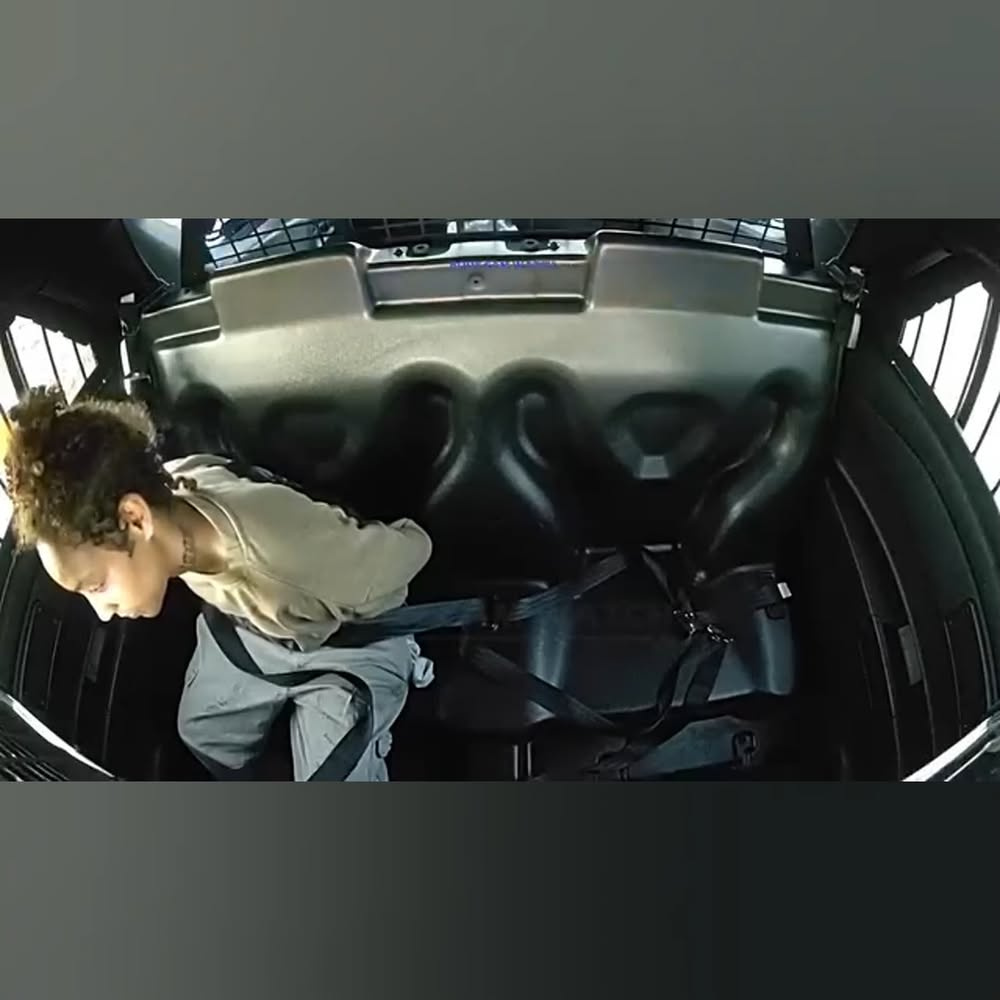



Breaking News: Talent Frontier on Reels
Welcome to our latest coverage on Talent Frontier on Reels. This topic has been trending across social media platforms and sparking conversations worldwide.
In this report, we break down the key details, analyze the footage, and provide you with everything you need to know about this developing story.
✨ Key Highlights
- Viral Content: Experience the moment everyone is talking about regarding Talent Frontier on Reels.
- In-Depth Analysis: A closer look at the details you might have missed.
- Global Impact: How this event is resonating with audiences everywhere.
- Expert Opinions: Insights and reactions from the community.
📊 Detailed Report
Beyond the headlines, this video offers a unique perspective that clarifies the context of the situation. The footage speaks for itself, capturing specific moments that define the narrative.
Observers have noted the significance of these events. Whether you are following this story closely or just tuning in, the video above provides the most accurate visual representation available.
❓ Frequently Asked Questions
1. What is the main focus of this video?
The video focuses on the core events surrounding the title topic, offering real-time footage and context.
2. Where can I find more updates?
Stay tuned to our website for follow-up reports and detailed analysis as this story unfolds.
🎯 Conclusion
We hope this report on Talent Frontier on Reels has kept you informed. Information is power, and staying updated with accurate visuals is more important than ever.
Thank you for reading. Don’t forget to share this article and leave your thoughts in the comments below!
Unleash the Roar: Production Cars Born from the Racetrack
For a decade in the automotive trenches, I’ve witnessed firsthand the potent synergy between motorsport and the vehicles we drive daily. It’s an electrifying connection, a visceral thrill that transcends mere aesthetics or minor performance upgrades. We’re talking about production cars that aren’t just inspired by racing; they are, in essence, their direct descendants. Beneath their hoods lie powerplants forged in the crucible of competition, engineered for the unyielding demands of the racetrack. These engines, honed through countless hours of testing and refinement under extreme duress, deliver a symphony of high-revving, adrenaline-pumping performance to public roads, offering a tangible link to the titans of motorsport.
This exploration delves into ten remarkable production vehicles that skillfully bridge the chasm between the hallowed grounds of racing circuits and the everyday asphalt. From the soul-stirring crescendo of V12s to the ferocious growl of turbocharged marvels, these ten production vehicles don’t just offer a taste of race car performance; they deliver a full-course meal. But before we celebrate these automotive gladiators, it’s crucial to understand the profound “why” behind automakers’ significant investments in the costly, high-stakes world of motorsport. How does this dedication to the track directly translate into the machines accessible to the average driver?
The Indelible Link: Motorsport DNA on the Road
The intrinsic relationship between motorsport and road-going automobiles is as old as the automobile itself. Racing acts as the ultimate engineering proving ground, subjecting vehicles and their components to the most brutal conditions imaginable. In this unforgiving arena, failure is not an option; it’s a costly lesson. The invaluable insights, technological breakthroughs, and sheer grit that engineers glean from the track inevitably find their way into the cars we use for our daily commutes. Whether it’s the evolution of sophisticated aerodynamic principles, the pioneering use of advanced lightweight materials, or the direct “trickle-down” of groundbreaking engine technology, innovation born from the intensity of racing directly paves the path for superior road cars.
Consider the ubiquitous nature of disc brakes and paddle shifters. These are now commonplace features in production vehicles, yet their origins lie squarely in the realm of high-octane racing. Furthermore, success on the track invariably amplifies a manufacturer’s brand prestige. When a company’s race car consistently dominates, its road-going counterparts are perceived as inherently more desirable, more capable, and more aspirational. While the dream of owning a Formula 1 car or a Le Mans prototype remains out of reach for most, the thrill of motorsport can still be palpable, especially when a genuine race-bred engine resonates beneath the hood of a street-legal machine. This principle, often summarized as “Win on Sunday, Sell on Monday,” is experiencing a powerful resurgence, marking a potentially transformative era for the automotive industry.
Ten Icons of Racing Pedigree on Public Roads
Let’s immerse ourselves in the world of these extraordinary vehicles, where the line between track and tarmac is intentionally blurred.
Alfa Romeo Montreal: The V8 Enigma
The Alfa Romeo Montreal, a car often overshadowed but eternally captivating, houses a 2.6-liter V8 engine that traces its lineage directly back to Alfa’s formidable Tipo 33 sports prototype. This endurance racer wasn’t just participating; it was competing fiercely in legendary events like the Targa Florio and the grueling 24 Hours of Daytona. While its output was meticulously detuned for civilian duties, the engine within the Montreal passionately retained much of its motorsport character. It readily climbed to a thrilling 7,000 RPM, generating a respectable 200 horsepower. The operatic roar of its V8, coupled with its undeniably sharp and futuristic styling, cemented the Montreal’s status as one of the most compelling and criminally underrated vehicles to ever bear the Alfa Romeo badge. The sheer desirability of Alfa Romeo performance cars continues to captivate enthusiasts.
BMW M1, M3 (E30), M5 (E28), M6 (E24): The Ultimate Driving Machines, Amplified
BMW’s unparalleled racing heritage is indelibly etched into the DNA of its most iconic M models. The legendary BMW M1, in particular, was powered by the potent 3.5-liter inline-six M88 engine. This powerplant was not a fresh creation but a direct derivation from the brand’s highly successful racing programs, notably the specialized BMW M1 ProCar series. This same formidable engine later found its way into the acclaimed E24 M6 and the E28 M5, cementing its reputation for robust performance. Concurrently, the revered four-cylinder S14 engine that propelled the E30 M3 also drew heavily from the M88 architecture and the turbocharged F1 engines developed under the M12 banner. It was meticulously engineered with direct inspiration from BMW’s dominant touring car racing efforts, sharing vital components and engineering principles with the machines that consistently conquered the German Touring Car Masters (DTM) circuit. Owning a piece of this BMW M heritage is a dream for many.
Chevrolet Camaro ZL1 (1969): The All-Aluminum Beast
The 1969 Chevrolet Camaro ZL1 was a statement piece, packing a colossal 427 cubic-inch (7.0-liter) V8 engine that was originally conceived for the savage world of Can-Am racing. Constructed entirely from aluminum, this engine was remarkably light for its sheer displacement, delivering a truly staggering amount of power. While factory ratings suggested 500 horsepower, the road-going version was prudently detuned to 430 hp. Nevertheless, the ZL1 package transformed the Camaro into a street-legal drag strip terror. Its race-honed engine lived on, finding its way into various formidable race cars competing in the fiercely contested SCCA Trans-Am series. With an exceptionally limited production run of just 69 units ever built, the 1969 Camaro ZL1 stands today as an extraordinarily rare and highly coveted automotive artifact, a prime example of American muscle car history.
Ferrari Dino 206 GT: The Unbadged Racing Gem
The Ferrari Dino 206 GT, a car that carries a unique historical footnote, featured a spirited 2.0-liter V6 engine. This powerplant was initially developed for Ferrari’s Formula 2 racing endeavors during the vibrant 1960s. Although recalibrated for road compliance, the engine graciously retained its exhilarating high-revving nature, imbuing the Dino with an undeniable racing spirit that made it an absolute joy to navigate on sinuous, winding roads. Producing a lively 180 horsepower, this output was more than adequate for a car weighing just over 2,000 pounds. Notably, the Dino was one of the few Ferraris of its era that did not bear the iconic Prancing Horse emblem on its exterior. It marked Ferrari’s groundbreaking introduction into the mid-engine V6 sports car segment, establishing a crucial precedent for many future, revered Ferrari models. Exploring classic Ferrari models reveals a rich tapestry of innovation.
Ferrari F50: Formula 1 on the Street
Created as a magnificent tribute to the Italian marque’s 50th anniversary, the Ferrari F50 represents an audacious elevation of the track-derived engine concept. Its heart is a 4.7-liter V12, the Tipo F130B, which was plucked directly from Ferrari’s formidable 1990 Formula 1 car, the Tipo 641, piloted by the legendary Alain Prost. This naturally aspirated behemoth relentlessly climbs to an ear-splitting 8,500 RPM, unleashing a colossal 513 horsepower. It delivers an unfiltered, raw sensation that is remarkably akin to piloting an actual F1 car on public roads. With minimal alterations necessary to meet road regulations, the F50 offered the closest possible experience to Formula 1 for a street-legal Ferrari of its time. Enthusiasts seeking exotic sports cars for sale with this level of provenance are few, but the allure remains immense.
Ford GT: A Tribute to Le Mans Legends
The Ford GT is a profound homage to one of motorsport’s most enduring legends: the Le Mans-winning Ford GT40. The 2005 iteration of the GT is powered by a 5.4-liter supercharged V8 whose developmental roots are deeply intertwined with the automaker’s dedicated endurance racing engine programs, sharing lineage with the powerplants utilized in Ford’s Daytona Prototype race cars. Similarly, the more contemporary 2017 Ford GT continues this proud tradition of motorsport-inspired performance. It boasts a twin-turbocharged 3.5-liter V6 engine, a direct product of Ford’s highly successful EcoBoost program that has seen extensive application and development in endurance racing. The pursuit of high-performance American cars often leads back to this iconic nameplate.
Jaguar XJ220: The World’s Fastest, Briefly
Emerging as one of the British marque’s most iconic and aspirational creations, the Jaguar XJ220 initially was envisioned with a V12 engine. However, it ultimately received a potent 3.5-liter twin-turbocharged V6, a powerplant directly sourced from the victorious Jaguar XJR-11 Group C race car. This competition-honed engine was instrumental in enabling the XJ220 to achieve a breathtaking top speed of 217 mph, a feat that briefly crowned it the fastest production car on the planet. The XJ220’s motor stands as a prime example of the most advanced, track-proven engine technology making its way into a road-legal automobile. The history of supercars is incomplete without mentioning this technological marvel.
Plymouth Belvedere (1964): The NASCAR Hemi Powerhouse
At first glance, the 1964 Plymouth Belvedere might not immediately scream “race car.” However, beneath its unassuming exterior pulsed the legendary 426 Hemi V8 engine, an absolute powerhouse specifically developed for the grueling world of NASCAR. Revered as the “Race Hemi,” this engine was an undisputed dominant force on the track and soon found its way into Plymouth’s production vehicle lineup. The road-going Belvedere, which churned out an impressive 425 horsepower, rapidly ascended to become one of the most potent muscle cars of the 1960s. This reputation for raw power was a legacy the brand proudly carried well into the 1970s with its equally legendary ‘Cuda. For those seeking classic muscle cars with powerful engines, the Belvedere is a compelling choice.
Porsche 918 Spyder: Hybrid Power from the Paddock
The Porsche 918 Spyder’s formidable 4.6-liter V8 engine is directly based on the RS Spyder, a prototype race car that famously competed in the LMP2 class at the esteemed 24 Hours of Le Mans. The 918 ingeniously integrated this competition-derived engine with advanced electric motors, resulting in a staggering combined output of 887 horsepower. This extraordinary power propelled the hypercar from 0 to 60 mph in a scarcely believable 2.2 seconds (according to independent testing), positioning it among the quickest production cars ever conceived. While the electric motors contribute significantly to its blistering acceleration, it is the race-derived V8 that provides the car’s soul-stirring emotional and auditory character. The evolution of hybrid hypercars owes much to this innovative approach.
Porsche Carrera GT: The Analog Supercar Masterpiece
The Porsche Carrera GT is frequently lauded as one of the greatest analog supercars ever meticulously crafted. A significant portion of its enduring legend stems from the magnificent 10-cylinder engine that propels it. The 5.7-liter V10 was initially conceived for Formula 1 during the V10 engine era. However, after those Formula 1 aspirations faltered, the engine was shelved, only to be later repurposed for a Le Mans prototype car that, ironically, never saw active track competition. Instead, Porsche made the inspired decision to integrate this race-built engine into its flagship supercar. This allowed the Carrera GT to produce an exhilarating 612 horsepower and aggressively rev to an impressive 8,000 RPM. With its feather-light construction and profound motorsport DNA, the Carrera GT remains one of the most challenging and rewarding supercars to master. The quest for boutique car manufacturers often leads to vehicles with this level of singular focus.
The Enduring Legacy of Track-Tuned Power
These ten vehicles represent more than just impressive engineering; they are tangible embodiments of passion, innovation, and a relentless pursuit of performance. They prove that the “Win on Sunday, Sell on Monday” philosophy remains a potent driving force in automotive development. The technology and spirit honed on the racetrack continue to enrich the driving experience for enthusiasts worldwide.
Whether you’re drawn to the guttural roar of a V8, the precise shriek of a V10, or the refined power of a V12, there’s an undeniable allure to driving a car with genuine motorsport lineage. These machines offer a direct connection to a heritage of speed, precision, and uncompromised engineering.
If you’ve been captivated by the idea of experiencing this exhilarating blend of racing heritage and street legality, now is the perfect time to explore your options. Discovering a vehicle that resonates with your passion for performance could be the next thrilling chapter in your automotive journey.