


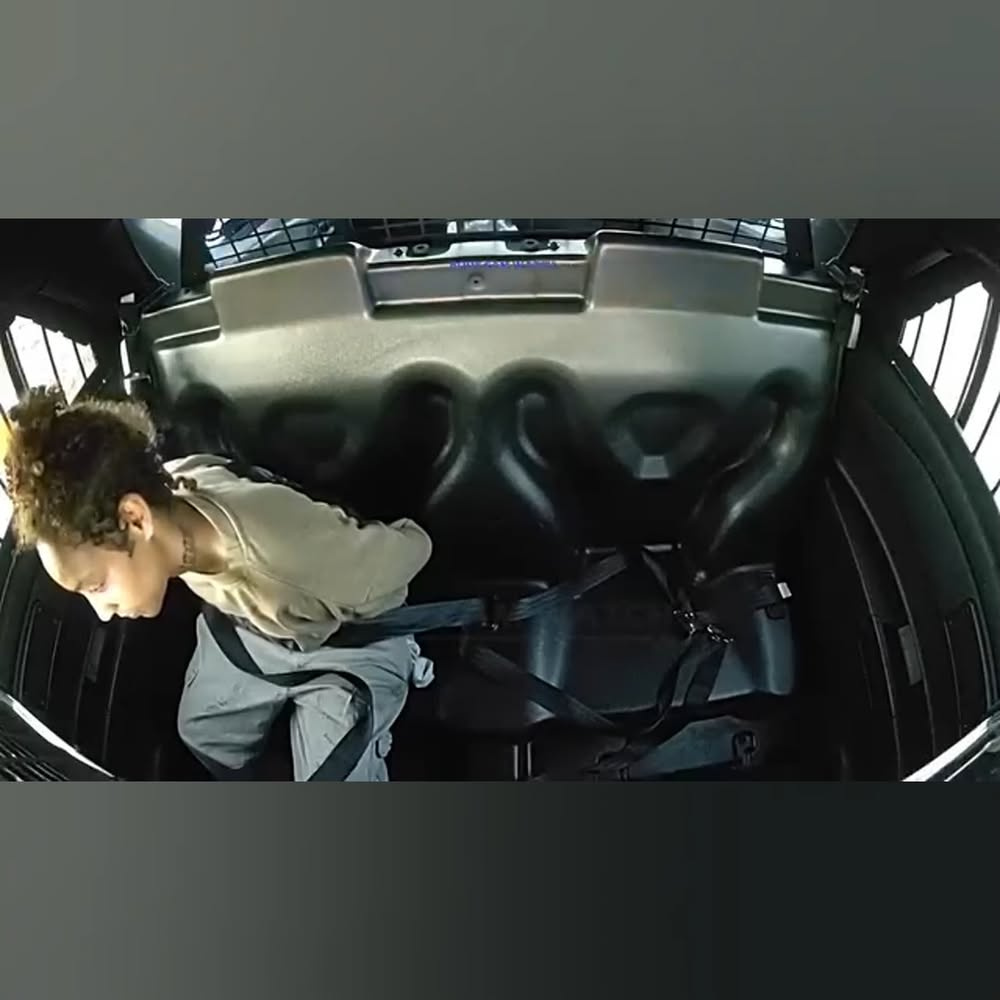
Review & Impressions: H2602002 Most Painful Traffic Stop of (Probably) part2 | Talent Frontier
Get ready for high-octane action with H2602002 Most Painful Traffic Stop of (Probably) part2 | Talent Frontier. Today, we are diving into the world of performance, speed, and engineering excellence.
Whether you are a petrolhead or just admire automotive beauty, this video showcases the incredible details that set this machine apart from the rest.
✨ Performance & Features
- Stunning Visuals: Witness the sleek design and aesthetics of H2602002 Most Painful Traffic Stop of (Probably) part2 | Talent Frontier.
- Raw Power: Experience the sound and fury of top-tier engineering.
- Driving Dynamics: A look at how it handles on the road (or track).
- Luxury Details: The craftsmanship that defines this class of vehicle.
📊 Behind the Wheel
This video isn’t just about specs; it’s about the feeling. The acceleration, the braking, and the sheer presence of the vehicle are captured perfectly in the footage above.
From the roar of the engine to the subtle design curves, every second is a treat for automotive enthusiasts. It highlights why this sector of the industry continues to captivate millions.
❓ Enthusiast Q&A
1. Is this a new model release?
This video features specific highlights that may be a new release, a custom build, or a classic review.
2. What makes this video special?
It captures the visceral experience of the vehicle, going beyond simple static images.
🎯 Final Thoughts
H2602002 Most Painful Traffic Stop of (Probably) part2 | Talent Frontier is truly a marvel. Videos like this remind us why we love automotive culture so much.
Ride safe and stay tuned for more supercar reviews, speed tests, and luxury showcases!
Unleash the Roar: 10 Production Cars with True Motorsport Hearts
For a decade now, I’ve had the privilege of immersing myself in the automotive world, witnessing firsthand the incredible evolution of vehicle technology and design. What consistently ignites my passion, however, are those rare machines that don’t just look like race cars, but are race cars, at least in their very soul. I’m talking about production vehicles that carry the unmistakable DNA of motorsport, housing engines born from the crucible of competition. These aren’t mere replicas; they are direct descendants of track legends, offering a visceral connection to the adrenaline-fueled world of professional racing.
This piece delves into 10 such production vehicles that brilliantly blur the line between the racetrack and your local street. From the piercing wail of a V12 to the guttural growl of a turbocharged powerhouse, these cars deliver a tangible taste of motorsport performance to the everyday driver. But before we celebrate these marvels, it’s crucial to understand why automakers invest billions in the high-stakes arena of motorsport and, more importantly, how that investment directly translates into the vehicles we can actually purchase and enjoy. This deep dive into motorsport-derived engines in production cars is more than just an enthusiast’s fascination; it’s a testament to engineering excellence trickling down.
The Symbiotic Dance: Motorsport and the Evolution of Road Cars
The relationship between motorsport and road-going vehicles is not a recent phenomenon; it’s a deeply intertwined history, a symbiotic dance of innovation and aspiration. The racetrack serves as an unparalleled proving ground, a demanding environment where engineers push the absolute limits of materials, aerodynamics, and powertrain technology. Failure on the track often means immediate and catastrophic consequences, a stark contrast to the more forgiving nature of public roads. This extreme testing environment breeds resilience, efficiency, and raw performance that eventually finds its way into the cars you and I drive.
Consider the ubiquitous disc brakes that bring modern vehicles to a halt with confidence, or the sophisticated paddle shifters that allow for lightning-fast gear changes. Both originated in racing, refined under immense pressure before becoming commonplace on production models. Beyond technological advancements, the allure of motorsport success is a potent marketing tool. A manufacturer’s race car dominating prestigious events like Formula 1 or the 24 Hours of Le Mans casts a halo effect over their entire product line, making their road cars appear more desirable, more capable, and more aspirational. While few of us will ever pilot a purpose-built prototype, owning a car with a race-bred engine provides a thrilling, albeit domesticated, connection to that world. This “win on Sunday, sell on Monday” philosophy, once a cornerstone of automotive marketing, is experiencing a powerful resurgence.
Alfa Romeo Montreal: The V8’s Enduring Song
When discussing motorsport DNA in production cars, the Alfa Romeo Montreal often flies under the radar, a gem overlooked by many. Beneath its captivating 1970s styling lies a 2.6-liter Tipo 33 naturally aspirated V8. This powerplant wasn’t an afterthought; it was directly derived from Alfa Romeo’s formidable Tipo 33 sports prototype, a car that carved its legacy in grueling endurance races like the Targa Florio and the 24 Hours of Daytona. While engineered for street legality and comfort, the Montreal’s V8 retained a significant portion of its racing character. It happily revs to a spirited 7,000 RPM, producing a respectable 200 horsepower. The intoxicating roar of that V8, combined with its uniquely sculpted body, cemented the Montreal’s status as one of Alfa Romeo’s most intriguing and undervalued creations, a true example of a race-bred engine in a road car.
BMW’s M-Power Maestros: M1, E30 M3, E28 M5, E24 M6
BMW’s M division is synonymous with performance, and its iconic models are living proof of this unwavering commitment to motorsport engineering for the street. The legendary BMW M1, a mid-engine marvel, was powered by the formidable 3.5-liter M88 inline-six. This engine was a direct product of BMW’s racing endeavors, most notably powering the M1 ProCar series. This same potent powerplant later found its way into the E28 M5 and E24 M6, bringing supercar performance to the sedan and coupe segments respectively. Even the iconic E30 M3, a darling of touring car racing, owes its existence to motorsport. Its 2.3-liter four-cylinder S14 engine was intricately linked to the M88 and the turbocharged M12 F1 engines. The S14 drew heavily from BMW’s touring car racing programs, sharing crucial components and engineering principles with the machines that dominated the Deutsche Tourenwagen Masters (DTM). These cars represent the pinnacle of performance car engineering derived from racing.
Chevrolet Camaro ZL1 (1969): The Can-Am Beast Unleashed
The 1969 Chevrolet Camaro ZL1 isn’t just a classic muscle car; it’s a street-legal missile that packed a Can-Am racing engine. Its heart was the legendary 427 cubic-inch (7.0-liter) all-aluminum V8, an engine originally conceived for the brutal world of Can-Am competition. This innovative aluminum construction made the engine remarkably light for its displacement, contributing to its astounding power output. While rated at a potent 430 horsepower for its street guise, the actual output was closer to 500 hp, a testament to its racing origins. The ZL1 package transformed the Camaro into a drag strip annihilator, and its robust engine continued its competitive life in the SCCA Trans-Am series. With a production run of only 69 units, the 1969 Camaro ZL1 remains one of the most exclusive and sought-after examples of a street-legal race engine. For those seeking American muscle cars with racing heritage, the ZL1 is an unparalleled choice.
Ferrari Dino 206 GT: The V6’s Racing Genesis
While the Ferrari Dino 206 GT famously didn’t bear the Prancing Horse badge – a decision made by Enzo Ferrari to differentiate its V6 offerings from the V12s – it undeniably possesses a strong motorsport connection. Its compact 2.0-liter Dino V6 engine was initially developed for Ferrari’s Formula 2 racing efforts in the 1960s. Though detuned for road use, the engine retained its thrilling high-revving nature, infusing the Dino with a palpable racing spirit. Producing 180 horsepower, it was more than adequate for the car’s feather-light curb weight of just over 2,000 pounds. The Dino 206 GT marked Ferrari’s pioneering foray into mid-engine V6 sports cars, establishing a blueprint for many successful models that followed. It’s a prime example of Ferrari engines with F2 origins finding a place on public roads.
Ferrari F50: Formula 1 on the Road
The Ferrari F50 is arguably the most direct manifestation of Formula 1 technology for road cars. Created to celebrate Ferrari’s 50th anniversary, its 4.7-liter Tipo F130B naturally aspirated V12 was lifted almost directly from the 1990 Formula 1 car, the Tipo 641 (also known as the F1-90), famously driven by Alain Prost. This screaming, naturally aspirated powerhouse revs to an astonishing 8,500 RPM and churns out 513 horsepower, offering an unfiltered taste of F1 performance. With only minor modifications to meet road regulations, the F50 represented the closest a street-legal Ferrari had ever come to replicating the raw experience of a Formula 1 car. For enthusiasts seeking the ultimate track-inspired supercar, the F50 stands unparalleled. Owning one is akin to possessing a piece of F1 history, a truly extraordinary production race car.
Ford GT: A Tribute to Le Mans Dominance
The Ford GT is more than just a supercar; it’s a modern-day homage to one of the most legendary race cars in history: the Le Mans-winning Ford GT40. The 2005 GT’s 5.4-liter supercharged V8 engine shares its lineage with the automaker’s endurance racing powertrain development, including engines used in Ford’s Daytona Prototype race cars. Fast forward to the 2017 Ford GT, and its twin-turbocharged 3.5-liter EcoBoost V6 continues this motorsport-derived performance legacy. This V6 is directly derived from Ford’s highly successful EcoBoost program that powered its endurance racers. The Ford GT embodies the spirit of performance vehicles with racing pedigrees, offering a potent blend of heritage and cutting-edge engineering for discerning drivers in cities like Detroit and beyond.
Jaguar XJ220: A Group C Engine’s Road Debut
The Jaguar XJ220, an icon of British automotive design, was initially envisioned with a V12 engine. However, it ultimately received a potent 3.5-liter twin-turbocharged V6 sourced from the Jaguar XJR-11 Group C race car. This remarkable competition-derived engine was the secret behind the XJ220’s astonishing top speed of 217 mph, making it the fastest production car in the world for a significant period. The XJ220’s motor was a sophisticated piece of engineering, a true testament to track-proven engines in road cars, pushing the boundaries of what was thought possible for a road-legal vehicle. For those searching for exotic cars with racing engines, the XJ220 presents a compelling case.
Plymouth Belvedere (1964): The NASCAR Hemi Legend
At first glance, the 1964 Plymouth Belvedere might appear to be just another classic American sedan. However, hidden beneath its hood is the legendary 426 Hemi V8, an engine forged in the fires of NASCAR. Dubbed the “Race Hemi,” this powerplant was an unstoppable force on the track and soon made its way into Plymouth’s production lineup. The road-going Belvedere, boasting 425 horsepower, became one of the most potent muscle cars of the 1960s, a reputation that would carry through the decade with its iconic ‘Cuda models. This is a prime example of NASCAR engine technology in street cars, offering an unfiltered dose of raw power and a direct link to the golden age of American racing. Enthusiasts looking for high-performance classic cars often gravitate towards Hemi-powered Mopars.
Porsche 918 Spyder: Hybrid Powerhouse with a Racing Heart
The Porsche 918 Spyder represents a bold leap into the future, seamlessly integrating cutting-edge hybrid technology with a race-derived powerplant. Its 4.6-liter V8 engine is based on the RS Spyder, a prototype race car that competed in the LMP2 class at the grueling 24 Hours of Le Mans. In the 918 Spyder, this competition-honed V8 is paired with advanced electric motors, resulting in a staggering combined output of 887 horsepower. This formidable combination allows the hypercar to rocket from 0 to 60 mph in a breathtaking 2.2 seconds, cementing its place among the quickest production cars ever made. While the electric motors contribute significantly to its overall performance, it’s the visceral emotion and exhilarating soundtrack of the race-derived V8 that truly defines the 918’s character. This is a prime example of hybrid hypercars with motorsport engines, offering a glimpse into the future of performance electric vehicles powered by race-bred V8s.
Porsche Carrera GT: The Analog Supercar’s V10 Soul
The Porsche Carrera GT is widely celebrated as one of the greatest analog supercars ever constructed, and a significant part of its legendary status is attributed to its magnificent 5.7-liter V10 engine. This powerplant was originally developed for Porsche’s Formula 1 ambitions during the V10 era. When those plans didn’t materialize, the engine was shelved, only to be resurrected for a Le Mans prototype program that ultimately never saw the racetrack. Instead, Porsche made the inspired decision to shoehorn this race-honed engine into its flagship supercar. The result is a car that produces 612 horsepower and screams to an exhilarating 8,000 RPM. Combined with its lightweight construction and the unadulterated motorsport DNA, the Carrera GT remains one of the most challenging and rewarding supercars to drive, a true testament to analog supercar performance.
These ten automotive marvels are more than just modes of transportation; they are rolling embodiments of racing passion and engineering prowess. They offer a tangible connection to the thrill of competition, a reminder that the pursuit of speed and performance on the track can indeed translate into an exhilarating experience for us all.
If the roar of a race-bred engine and the allure of motorsport heritage calls to you, then it’s time to explore these incredible machines further. Whether you dream of experiencing the raw power of a V10 on an open road, the intricate engineering of a turbocharged V6, or the pure, unadulterated symphony of a naturally aspirated V8, the world of performance cars with motorsport origins awaits. Take the next step in your automotive journey and discover the thrill of a car with a true racing heart.