
The Volkswagen Golf GTE: A 4,000-Mile Deep Dive for the Discerning Company Car Driver
For over a decade, the automotive landscape has been reshaped by evolving economic pressures and a growing demand for smarter, more cost-effective personal transportation solutions. For many professionals, the company car or salary sacrifice scheme has become a cornerstone of their vehicle acquisition strategy, offering significant financial advantages over traditional ownership models. As an industry expert with ten years of experience navigating these trends, I’ve seen firsthand how vehicles like the Volkswagen Golf GTE have carved out a unique and compelling niche for drivers who refuse to compromise on driving enjoyment, even within the framework of corporate fleet management. This isn’t just about mileage; it’s about a calculated decision for those who appreciate a spirited drive while maximizing their fiscal prudence.
The initial premise of the Volkswagen Golf GTE as a company car for driving enthusiasts is more relevant than ever. In 2025, the soaring cost of new vehicles remains a persistent challenge. This reality pushes more individuals toward employer-provided options, particularly salary sacrifice schemes. These programs allow for pre-tax deductions for vehicle payments, drastically reducing the overall tax burden compared to outright purchase or conventional financing. While outright ownership is off the table and Benefit-In-Kind (BIK) tax is a factor, the financial equation often heavily favors these schemes, especially when juxtaposed with Personal Contract Purchase (PCP) or Hire Purchase (HP) agreements. Indeed, the substantial uptake of over a million new cars through these channels in the UK alone last year underscores their undeniable appeal.
This market dominance incentivizes manufacturers to tailor specific models to this lucrative segment. While electric vehicles (EVs) currently reign supreme due to their exceptionally low 3% BIK tax rates, plug-in hybrid electric vehicles (PHEVs) are emerging as a potent alternative for those who either cannot or prefer not to make the full EV leap. These PHEVs boast remarkably low official emissions and astonishing official MPG figures that, at first glance, seem almost unbelievable – yes, figures in the ballpark of 850mpg are indeed part of the official calculations for some models.
Enter the Volkswagen Golf GTE, a vehicle that has occupied a significant portion of my personal fleet for an extended period. For the discerning individual seeking a sporty hatchback without venturing into prohibitively expensive territory, the Golf has always been a benchmark. The GTE variant, in particular, presents a fascinating proposition. It delivers a formidable 268 horsepower (bhp) and can accelerate from 0 to 62mph in a brisk 6.6 seconds. For comparison, the iconic Golf GTI, a perennial favorite among driving enthusiasts, offers slightly less power at 261bhp but, due to its lighter weight, achieves the same benchmark sprint in a mere 5.9 seconds. The financial gulf, however, is where the GTE truly shines for the pragmatic professional. With a list price hovering around £40,140, it sits competitively against the GTI’s £40,870.
On paper, all else being equal, the GTI might appear the more compelling choice for the purist driving enthusiast. Its reputation as a more engaging driver’s car is well-earned. However, the calculus shifts dramatically when considering the BIK tax implications. The GTI typically falls into a higher BIK tax bracket, while the GTE, owing to its plug-in hybrid credentials and lower official emissions, occupies one of the lowest. This translates to tangible monthly savings for the company car user – potentially hundreds of pounds per year, accumulating to a significant sum over the ownership period. My own experience confirms this, with GTE owners often facing a BIK tax bill considerably lower than their GTI counterparts, representing a substantial annual saving that can be reinvested elsewhere.
It’s crucial to understand that the GTE is not simply a GTI with an added electrical component. While sharing the Golf lineage and sporty aspirations, it charts its own course. It certainly offers a more performance-oriented experience than the other plug-in hybrid Golf variant, the eHybrid, which shares the same battery capacity but produces a more modest 201bhp. This positions the GTE in a compelling sweet spot: offering significant cost savings through its PHEV technology while still delivering a genuinely engaging and sporty driving experience. The central question I set out to answer during my extensive evaluation was whether this potent combination of fiscal advantage and spirited performance could truly win over the dedicated car enthusiast.
The GTE’s powertrain is a sophisticated blend of a 1.5-litre turbocharged four-cylinder petrol engine, producing 160bhp, and a 108bhp electric motor. Together, they generate a combined output of 268bhp, channeled to the front wheels via a swift-shifting six-speed dual-clutch automatic transmission (DSG). The heart of its electric capability lies in a substantial 19.7 kilowatt-hour (kWh) battery pack. This generous capacity allows the GTE to cover an impressive official electric-only range of up to 81 miles. To put this into perspective, this figure significantly eclipses the 44-mile electric range offered by some competitors, such as the Mercedes-Benz A250e. This extended electric-only capability is a critical factor in its low BIK tax rating and its potential for cost-effective urban commuting.
However, the inherent duality of a PHEV brings with it a dual requirement: the need to both charge the battery and refuel the petrol tank. For individuals, like myself during this test, who lack dedicated home charging facilities, this presents a unique challenge. The question then becomes: is the GTE a viable and cost-effective proposition for someone reliant on public charging infrastructure? The compatibility with DC fast chargers, a significant upgrade in the latest iteration, undoubtedly aids this scenario, significantly reducing the time spent replenishing the battery when on the move.
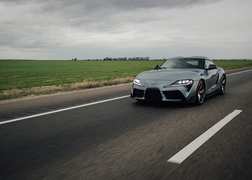
Visually, the GTE strikes a balance between the standard Golf’s understated elegance and the GTI’s more aggressive stance. Both the GTE and GTI share the same sporty front-end design. However, the GTI typically sits lower to the ground, features distinct wheel designs, and boasts prominent, chunky tailpipes. The GTE, in contrast, maintains the standard Golf’s ride height and discreetly tucks its exhaust system out of sight. The aesthetic of the Mk8.5 Golf, particularly in striking hues like Crystal Ice Blue (a rather striking £1375 optional finish), is undeniably appealing. While it may not possess the overtly aggressive posture of a dedicated hot hatch, the GTE holds its own visually, presenting a refined yet sporty countenance. And yes, the illuminated badges, while perhaps a touch ostentatious for some, do add a distinctive flourish.
The interior of the GTE mirrors the contemporary Golf ethos, dominated by a commanding 12.9-inch central touchscreen that orchestrates most of the vehicle’s functions. Physical buttons are largely relegated to the multifunction steering wheel, and an abundance of gloss black trim imparts a modern, if sometimes fingerprint-prone, aesthetic. Standard features include wireless phone charging and surprisingly supportive, sporty seats upholstered in a fabric reminiscent of the GTI’s iconic tartan pattern, albeit in a blue and white palette. These seats proved exceptionally comfortable during extended journeys. A notable drawback, however, is the compromised boot space. The substantial battery pack reduces the GTE’s luggage capacity to a mere 273 litres, a significant reduction from the 381 litres found in the standard Golf. This is a factor that can prove inconvenient when transporting larger items or extensive luggage.
My initial experiences behind the wheel of the GTE were overwhelmingly positive. Drawing parallels with my recent drive in the new GTI, I found that while the GTE may not possess the same razor-sharp focus, the underlying Golf DNA is undeniably present. The steering is commendably weighted and responsive, the handling feels precise and direct, and the chassis exhibits a degree of rigidity that allows for spirited cornering. For a vehicle positioned as a cost-effective, salary-sacrifice special, this level of driving engagement is remarkably impressive.
Update 1: The Art of Fiddling and the Hybrid Balancing Act
My inherent curiosity, a trait that has fueled my fascination with automotive technology since childhood, finds a perfect outlet in the complex systems of modern vehicles. I’m often the one my family and friends rely on to navigate the intricate menus of their cars, a habit that sometimes elicits a nervous chuckle from those less inclined to explore the digital depths of their vehicles. This brings me to the Volkswagen Golf GTE, a car where such “fiddling,” as it were, is not only encouraged but often necessary to unlock its full potential.
Given that virtually every function is accessed via the central touchscreen, a thorough understanding of its interface is paramount. Some of the mandatory safety systems, such as the lane-keeping assist and speed limit warnings, can be intrusive and, frankly, rather annoying. The necessity of deactivating these with every ignition cycle is a persistent point of contention – a minor, yet frequent, frustration that I sincerely hope future iterations will address.
However, the true joy lies in customization. I’ve configured my preferred driving mode by selecting a ‘Sport’ drivetrain setting, which unlocks a genuinely invigorating level of acceleration, while maintaining a ‘Comfort’ setting for all other parameters, including Volkswagen’s sophisticated 15-way adaptive dampers (Dynamic Chassis Control). This allows for a blend of sporty responsiveness when desired and plush comfort for everyday driving.
The powertrain management of a PHEV, especially without home charging, presents a unique logistical puzzle. I recently embarked on a series of three 130-mile round trips within a four-day period. My initial plan was to meticulously manage the electric range across these journeys, given my reliance on public charging. With a full tank of petrol and a fully charged 19.7kWh battery indicating approximately 60 miles of electric range, I set off.
Five miles into my first commute, I noticed an unusual quietness – the petrol engine had yet to engage. It dawned on me that the GTE had defaulted to pure E-mode, depleting the electric charge entirely from the outset. A slight grumble escaped me as I manually switched to Hybrid mode, and the petrol engine reluctantly came to life. My initial assessment was that I had already consumed half of the electric range within the first 65 miles. This realization necessitated a significant strategic rethink; the initial approach was clearly not sustainable for my particular charging circumstances.
Before my return journey, I delved deeper into the system’s settings. I discovered that a default Hybrid start-up setting was not available – a peculiar oversight from Volkswagen. However, I did find a ‘manual control’ feature that allows the driver to pre-determine a desired level of battery charge upon arrival at their destination. My intention was to spread the electric charge evenly across the entire journey. I therefore set a 20% charge retention target.
To my initial dismay, the system did not operate as I had anticipated. The battery was largely depleted within the first 20 miles, leaving the petrol engine to handle the remaining 55 miles. It became apparent that the car needed explicit knowledge of the journey’s duration to effectively manage the battery usage. This was a learning curve; the car required more input than I had initially provided.
For the subsequent attempt, after replenishing the battery, I re-applied the 20% charge limit. Crucially, this time, I also inputted my destination into Volkswagen’s native navigation system, bypassing my usual preference for Android Auto. I had been advised by colleagues that this action should enable the car to intelligently manage its energy reserves. However, even with this adjustment, the outcome was similar: the electric charge was consumed within approximately 20 miles. A moment of introspection was required; this was an experiment, and learning the nuances of the technology was part of the process.
By the end of that week, having traveled just under 400 miles, and meticulously managing my charging and driving strategy, I achieved an astonishing average of 77mpg. This figure is remarkably impressive. To provide a fair comparison, I then spent the weekend operating solely on the 1.5-litre turbocharged petrol engine, achieving a respectable average of 52mpg. This starkly illustrated the efficiency gains offered by the hybrid system, which effectively utilized regenerative braking to recoup energy even when starting with a depleted battery.
The core question then becomes: does the effort of charging the battery once a week and diligently configuring the car’s settings for each journey justify the additional 25mpg improvement? For me, unequivocally, yes. Without the convenience of home charging, the cost of replenishing the battery from a public charger is comparable to adding half a tank of petrol. However, the true advantage of a PHEV lies in optimizing the synergy between its electric and petrol powertrains. My hope is that with continued use, familiarity will simplify this intricate process, making energy management feel more intuitive.
Update 2: The Engaging Enthusiast’s Pragmatist
My appreciation for the Volkswagen Golf GTE has only deepened with continued use. This plug-in hybrid, masquerading as a hot hatch, has proven exceptionally user-friendly, remarkably comfortable, and consistently returns impressive fuel economy. Visually, it remains a handsome machine, prompting the perennial question: do you truly need more car than this?
The primary critique I’ve encountered, often voiced by fellow car enthusiasts, including colleagues who own dedicated hot hatches like the Golf GTI, is that the GTE possesses all the aesthetic accoutrements of a sporty car but lacks the inherent dynamism to truly back it up. They contend that it projects a sporty persona without delivering the commensurate driving thrill. This sentiment is understandable; the GTE doesn’t quite deliver the same visceral excitement as its more focused counterparts.
However, I believe this criticism overlooks a crucial aspect: is the GTE sufficiently engaging for the average driver seeking an enjoyable driving experience? To test this hypothesis, I’ve deliberately rerouted my commutes, eschewing the faster motorway routes for more engaging B-roads and scenic routes. And you know what? I’ve genuinely had fun. No, it doesn’t replicate the unadulterated connection through the steering wheel of a GTI, nor does it offer the creamy, characterful exhaust note of that iconic turbocharged engine. The additional weight of the electrical components is also a discernible factor.
Yet, there are undeniable thrills to be had. The immediate torque surge from the electric motor provides a potent burst of acceleration out of tight corners. When the petrol engine seamlessly joins the fray, the GTE pulls with impressive vigor. The steering offers sufficient weight and accuracy to inspire confidence, the grip levels are tenacious, and the chassis effectively manages body roll, even during enthusiastic cornering. This isn’t a car that relentlessly goads you into aggressive driving, but it is one that responds with enthusiasm when you decide to push the boundaries a little harder.
The ultimate test for any enthusiast is whether a car inspires you to drive it for the sheer pleasure of it. I confess, I’m not waking up before dawn on a Sunday, desperate for a spirited blast in the GTE. However, I now find myself consciously opting for longer, more circuitous routes home, a subtle yet significant indicator of its inherent appeal.
Update 3: The Hatchback’s Enduring Versatility in an SUV World

The decline in the popularity of traditional hatchbacks over recent years is a trend I find rather lamentable. The meteoric rise of SUVs, now accounting for a staggering 60% of new car sales in the UK, up from a mere 13% a decade ago, is a primary driver of this shift. While I have no inherent aversion to SUVs – their spaciousness, elevated driving position, and substantial fuel tanks or battery capacities are undeniably attractive – my extended time with the Volkswagen Golf GTE has solidified my preference for the hatchback format. Spending what feels like an inordinate amount of time with the GTE, accumulating nearly 2000 miles, has been a revelation.
A key factor in this renewed appreciation for the hatchback is its remarkable adaptability. While SUVs excel in sheer volume, the GTE has consistently demonstrated its ability to handle a surprising array of tasks, often exceeding expectations. There have been only a handful of instances in recent months where I’ve genuinely needed a larger vehicle. One such occasion involved transporting several friends and their accompanying gear to a music festival, a task that was expertly handled by a cavernous Mazda CX-80. For all other occasions, however, the Golf has been an absolute dream, effortlessly accommodating whatever has been thrown at it.
Consider, for example, a recent flat clear-out with my wife. We needed to transport a television, its stand, a substantial amount of clothing, and various other assorted items. With the rear seats folded down, unlocking the full 1162 litres of cargo capacity, we were able to fit everything comfortably, with ample space remaining for us both in the front. Later that week, with the newly acquired space from that trip to the recycling center, I needed to collect a new television, measuring a considerable 55 inches diagonally, from a seller located about 30 miles away. I harbored some skepticism, but with the rear seats once again folded, the television, albeit with a bit of strategic maneuvering and the front seats pushed slightly forward, found a secure home. Another tick in the Golf’s versatility box.
This was followed by several round trips exceeding 200 miles, during which the Golf performed admirably, with no fuss, no discomfort, and remarkably little expense. It averaged a commendable 49mpg on these longer journeys. We again pushed the limits of its capacity during a trip to Bristol that required the use of all five seats and the boot. While the rear passengers were in close proximity, they reported no significant discomfort. My wife and I then embarked on a trip encompassing a wedding and an overseas holiday, necessitating substantial luggage space. The Golf handled this with aplomb, proving that its hatchback form factor is far more accommodating than its exterior dimensions might suggest.
On all these occasions, I never once found myself wishing for a larger vehicle, which, in my opinion, is the highest compliment one can pay to a hatchback. The Golf’s manageable 4289mm footprint made parking a breeze, its intuitive infotainment system kept us entertained, and its sporty chassis setup provided an engaging driving experience, regardless of the journey’s length. While I do lament the slightly smaller boot capacity, often necessitating the folding of rear seats or placing bags on laps, and the cabin’s somewhat drab aesthetic, these are minor quibbles that fade into insignificance when considering the car’s overall competence and versatility. The Golf continues to prove itself a superb all-rounder and a genuine, compelling alternative to the ubiquitous SUV. Whether I would specifically opt for the GTE version again remains a question I will answer as it nears the end of its tenure in our fleet.
Final Report: The GTE vs. the GTI – A Calculated Decision
An insightful email from a reader, Rob Lightbody, provides the perfect segue into this final assessment and elegantly ties back to the original purpose of this long-term evaluation. Rob, the owner of a 2017 Golf GTI, posed a pertinent question: “Do you think you’d be better off in the GTI version instead of the GTE?” He rightly pointed out the GTI’s larger boot capacity, the absence of a cumbersome charging cable to store, and the fact that while it might sacrifice some MPG, it still returns over 40mpg on longer runs.
This is a crucial question, particularly given that the GTI, at £41,810, commands only a modest £1500 premium over the GTE. On the surface, the sportier option might appear the more obvious choice for an enthusiast. However, my extensive experience with the plug-in hybrid Golf suggests the decision is far from straightforward.
Visually, the GTE remains a stunner. The aggressive front end, coupled with the optional Crystal Ice Blue paint and black roof, creates a truly striking aesthetic. My only reservations lie with the desire for visible exhausts and the optional, somewhat boy-racer illuminated badges.
The interior continues to impress with its comfort. The GTE has proven to be the most comfortable car I’ve driven this year, largely attributable to its deep, supportive seats that make even the longest journeys a pleasure. The 12.9-inch infotainment screen, while occasionally garish, is responsive, sharp, and a joy to use. I could, however, do without some of the touch-sensitive controls, particularly for the panoramic sunroof, which could sometimes be temperamental. The cabin’s overall drabness, with its preponderance of grey hues and what felt like budget-conscious black plastic trim, remains a slight detractor from an otherwise excellent interior.
Rob’s point about storage is well-founded. The GTE’s modest 273-litre boot capacity, compounded by the lack of dedicated cable storage, was a recurring point of minor annoyance. The GTI, benefiting from the absence of a large battery pack beneath the boot floor, offers an additional 100 litres of space. This difference might not be apparent on a day-to-day basis but becomes significant when planning extended trips. At best, only one large suitcase or two weekend bags could comfortably fit in the GTE’s boot when configured for five occupants.
Crucially, for a car aspiring to sporty credentials, the GTE delivers genuine driving fun when those journeys arise. While it may not possess the outright refinement and razor-sharp focus of the GTI, its confidence-inspiring grip, well-sorted chassis, and reassuringly weighty steering consistently encouraged me to explore longer, more scenic routes home. By ensuring I had adequate battery charge at my disposal, the added torque from the electric motor transformed the GTE into a formidable corner-conqueror.
Rob’s final point regarding MPG is equally vital for prospective GTE owners. As an individual without home charging facilities, I am admittedly not Volkswagen’s target demographic for this vehicle. However, considering the proliferation of company car schemes and the GTE’s remarkably low £40-per-month BIK tax (a stark contrast to the GTI’s £243 monthly BIK), it is highly probable that the GTE will appeal to a significant portion of UK residents who lack off-street parking.
For me, relying on public chargers – which are notoriously expensive – to keep the GTE’s 19.4kWh battery topped up was a financial reality. While the approximately 60 miles of real-world electric range did push my average MPG to an impressive peak of 77mpg, it paradoxically inflated the cost per mile to around 19 pence, making it more expensive than running solely on the 1.5-litre petrol engine (approximately 12 pence per mile). This factor was a primary reason why, more often than not, I found myself running the hatchback on petrol power alone, achieving an overall average of 46.7mpg – a figure not dramatically dissimilar to the “over 40mpg” Rob reports from his GTI on longer journeys. These figures are more a reflection of the punitive cost of public charging than an indictment of the plug-in hybrid technology itself. Ideally, a fully self-charging hybrid powertrain for the Golf would offer greater appeal and broader market penetration. Volkswagen is reportedly exploring such an option for the Golf lineup, which is certainly worth monitoring.
Ultimately, returning to Rob’s core question: would I be better off in a GTI? If my personal financial circumstances allowed for the outright purchase and running costs of a GTI, that would be my choice. However, for a company car user presented with the choice between both, the substantial annual BIK savings offered by the GTE – potentially in the region of £2436 – would be a compelling, and potentially decisive, factor.
While it may not possess the same level of refinement as the GTI, the Golf GTE remains a truly excellent vehicle, and, as the brief dictated, it is undoubtedly fun to drive. It represents a compelling fusion of efficiency, practicality, and genuine driving enjoyment, making it a smart choice for the discerning professional.
Your Next Step:

Considering the evolving landscape of company car benefits and the compelling financial advantages offered by plug-in hybrid technology, are you ready to explore how a vehicle like the Volkswagen Golf GTE could redefine your daily commute and your budget? It’s time to delve deeper into the specific offerings available through your employer or explore independent leasing options. Take the next step and discover the smart way to drive.