
Volkswagen Golf GTE Long-Term Test: A 4,000-Mile Verdict for the Discerning Company Car Driver
For a decade now, I’ve been immersed in the automotive industry, witnessing firsthand the evolution of vehicle technology and consumer demands. One trend that has become undeniably dominant is the rise of company car and salary sacrifice schemes, particularly for those who appreciate a driving experience that transcends mere transportation. New vehicle prices continue their relentless ascent, making these employer-provided programs not just advantageous, but often the most financially sensible route for acquiring a new car. While the allure of electric vehicles (EVs) is potent, with their exceptionally low Benefit-in-Kind (BIK) tax rates, the practicalities for all drivers don’t always align with a full EV transition. This is where the plug-in hybrid (PHEV) has carved out a crucial niche, offering a compelling blend of electric efficiency and gasoline independence. My recent 4,000-mile immersion with the Volkswagen Golf GTE has been a deep dive into this very segment, exploring whether this performance-oriented PHEV can truly satisfy the enthusiast driver seeking significant cost savings.
The Company Car Conundrum: Balancing Performance and Pragmatism
The landscape of company car acquisition has been fundamentally reshaped by financial incentives and evolving environmental regulations. Salary sacrifice schemes, in particular, have become a powerful tool for employees to access new vehicles, offering substantial tax advantages by deducting monthly payments pre-tax. While the absence of outright ownership and the obligation to pay BIK tax are inherent caveats, the financial calculus often favors these schemes significantly when compared to traditional financing options like Personal Contract Purchase (PCP) or Hire Purchase (HP). This has led to a surge in company car registrations, with manufacturers keenly aware of the need to cater to this substantial market segment.
Electric vehicles, with their near-negligible BIK tax (often a mere 3%), are the undisputed champions in this arena. However, for drivers who either cannot or do not wish to commit to a full EV – perhaps due to charging infrastructure limitations or range anxiety on longer journeys – the current generation of plug-in hybrids presents an increasingly attractive proposition. Many PHEVs boast official fuel economy figures that appear almost surreal, with some reaching as high as 850mpg, thanks to their ability to cover significant distances on electric power alone.
Enter the Volkswagen Golf GTE: A Contender with a Twist
The Volkswagen Golf GTE has long occupied a prominent position in this segment, and my recent long-term test was designed to put its real-world applicability to the ultimate test. For drivers who crave the familiar DNA of a sporty hatchback but are navigating the intricacies of company car schemes, the Golf GTE inevitably enters the conversation.
On paper, the GTE presents a formidable package. Its 268 brake horsepower (bhp) output allows it to sprint from 0 to 62mph in a brisk 6.6 seconds. This performance figure places it tantalizingly close to its internal combustion sibling, the Golf GTI, which, while producing slightly less power (258bhp), is lighter and achieves the same benchmark sprint in a quicker 5.9 seconds. The price points are also remarkably close: the GTE retails at around £40,140, while the GTI commands a slightly higher £40,870.
At first glance, for the pure driving enthusiast, the GTI might seem the obvious choice. It is, after all, a more focused driver’s car. However, the crucial differentiator for company car users lies in the BIK tax implications. The GTI, with its traditional powertrain, falls into a significantly higher tax bracket, leading to an estimated £243 per month in BIK tax. The GTE, on the other hand, benefits from its plug-in hybrid status, placing it in a much more favorable tax band, with owners paying an estimated £155 per month – a substantial saving of approximately £1,000 annually. This financial disparity is a pivotal factor for many buyers, and it’s the core of the question I sought to answer: can the GTE’s significant cost savings, coupled with its warmed-up, rather than outright hot-hatch, performance, genuinely appeal to the driving enthusiast?
It’s important to acknowledge that the GTE is not simply a GTI with a battery bolted on. While sharing the Golf’s inherent platform and quality, its tuning and character are distinct. It sits above the less performance-oriented Golf eHybrid, which utilizes the same 19.7kWh battery and produces 201bhp, but lacks the GTE’s sporting intent. The question, then, is whether this unique positioning – a blend of substantial financial advantages and a sportier, yet not hardcore, driving experience – can sway a car lover.
Under the Skin: The Technical Symphony of the GTE
The GTE’s sophisticated plug-in hybrid powertrain is a masterclass in balancing performance and efficiency. It comprises a 1.5-litre, four-cylinder turbocharged petrol engine, delivering 160bhp, seamlessly integrated with a 108bhp electric motor. Together, they produce a combined output of 268bhp, channeled to the front wheels through a smooth and responsive six-speed dual-clutch automatic transmission (DSG).
A key strength of the GTE is its substantial 19.7kWh battery pack. This generous capacity unlocks an impressive official electric-only range of up to 81 miles. To put this into perspective, this significantly eclipses the 44-mile electric range offered by the Mercedes-Benz A250e, a key competitor in the PHEV premium compact segment. This extended electric range is a game-changer for daily commuting, offering the potential for truly zero-emission journeys for many users.
Of course, the inherent caveat of any PHEV is the dual requirement of charging the battery and refuelling the petrol tank. For me, personally, the absence of a home charging solution presented an intriguing challenge. Could the GTE remain a viable and cost-effective proposition for someone reliant solely on public charging infrastructure? The recent introduction of DC fast charging compatibility for the GTE offered a glimmer of hope, promising faster and more convenient top-ups when away from home.
Design Cues: A Blend of Sportiness and Sophistication
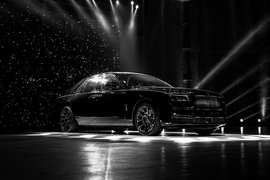
Visually, the Golf GTE occupies a compelling middle ground between the standard Golf and the more aggressive GTI. The front-end design, with its sharp lines and assertive grille, is shared with the GTI, lending it a purposeful stance. However, the GTE sits at a standard Golf ride height, whereas the GTI adopts a lower, more sporting posture. Subtle differences, such as the GTE’s hidden exhaust system compared to the GTI’s chunky dual tailpipes, further delineate the models.
As a long-time admirer of the Mk8.5 Golf’s styling, particularly its road presence, I found the GTE’s aesthetics highly appealing. While it may not be an out-and-out track weapon, its visual presence is undoubtedly sporty, especially when finished in a striking hue like the optional Crystal Ice Blue. The illuminated badges, while perhaps a touch boy-racer for some, add a distinctive premium flourish.
Interior Ambiance: The Modern Golf Experience
Stepping inside the GTE, the familiar Golf interior narrative unfolds. A vast 12.9-inch central touchscreen dominates the dashboard, serving as the primary interface for most vehicle functions. Physical controls are judiciously limited, primarily to the multifunction steering wheel. The pervasive use of gloss black trim, while visually appealing, is a fingerprint magnet, a common observation across the premium compact segment.
Standard features include wireless phone charging, a welcome convenience. The seats, clad in a distinctive Jacara checked cloth with a sporty tartan pattern accented in blue and white (a nod to the GTI’s red and black), offer excellent support and comfort. After extended periods behind the wheel, I can attest to their supremely comfortable nature, a critical factor for long commutes and road trips.
However, one notable compromise inherent to the GTE’s PHEV architecture is the reduction in boot space. The large battery pack encroaches upon the cargo area, resulting in a quoted capacity of just 273 litres, a significant reduction from the 381 litres found in a standard Golf. This is a point of contention, especially for those who frequently carry bulky items or require substantial luggage capacity.
First Impressions: A Promising Prelude
Despite my limited initial time behind the wheel, my first impressions of the Golf GTE were overwhelmingly positive. Drawing comparisons to the new GTI I had recently driven, the GTE, while not as singularly focused, undeniably inherits the Golf’s inherent dynamism. The steering is commendably well-weighted and precise, the handling remains sharp and direct, and the chassis possesses sufficient stiffness to inspire confidence during spirited cornering. For a vehicle positioned as a financially astute company car option, its driving dynamics are surprisingly engaging.
Update 2: The Experimentation Phase – Mastering the Hybrid Maze
My penchant for tinkering with new technology, a trait that has often caused mild anxiety for family members when I approach their car’s infotainment systems, found a fertile ground in the Golf GTE. The fully digital interface, while offering immense customization, also presents a learning curve. My immediate priority was to disable some of the more intrusive mandatory safety systems, such as the lane-keeping assist and speed limit warnings, which often require re-activation upon every engine start – a minor but persistent annoyance.
I then delved into creating my personalized driving profile. This involved selecting the “Sport” setting for the drivetrain, unlocking a surprisingly potent acceleration response, while opting for “Comfort” for all other parameters, including Volkswagen’s impressive 15-way adjustable Dynamic Chassis Control adaptive dampers. This hybrid approach allowed me to tailor the GTE’s character to my preferences, blending sporty responsiveness with a plush ride.
The real challenge, however, lay in optimizing the powertrain’s hybrid strategy. Faced with three 130-mile round trips over a short period and lacking a home charger, my objective was to maximize the utility of the 19.7kWh battery. Initially, my plan was to distribute the electric charge across the journeys, avoiding premature depletion. However, a subtle oversight – the car defaulting to pure “E-mode” on startup – meant the engine remained silent until I consciously selected “Hybrid” mode. This initial misstep led to an unexpected realization: I had already consumed half of my electric range within the first 5 miles of my first commute, a stark indicator that my strategy required recalibration.
The GTE’s inability to default to Hybrid mode on startup was a frustrating oversight. I discovered a “manual control” setting that allowed me to pre-allocate a percentage of battery charge to be reserved for arrival. My initial attempt to reserve 20% was met with similar disappointment; the battery was depleted within the first 20 miles, leaving the petrol engine to power the remaining 55 miles of the journey. The crucial realization was that the car needed explicit navigational input to effectively manage its hybrid strategy.
My third attempt involved setting the 20% reserve and, crucially, inputting my destination into the GTE’s native navigation system, bypassing my preferred Android Auto. While I had been advised this would optimize the hybrid management, the outcome was, yet again, disappointing. The allocated charge was consumed within approximately 20 miles. This repeated pattern transformed the experience into something of an extended experiment, a testament to the complexity of maximizing PHEV efficiency without ideal charging conditions.
Despite these initial frustrations, by the end of the week, having covered just under 400 miles, I achieved an astonishing average of 77mpg. This figure was a direct result of my persistent efforts to manage the hybrid system and leverage regenerative braking. For comparison, running solely on the 1.5-litre TSI engine, I managed an average of 52mpg. The hybrid system, even when starting with a depleted battery, demonstrated impressive efficiency, recovering charge effectively through regenerative braking.
The core question remained: did the effort of meticulous configuration and weekly charging justify the additional 25mpg compared to purely gasoline operation? For me, unequivocally, yes. While public charging costs added to the expense, the ability to blend electric and gasoline power optimally is where the PHEV truly shines. My hope was that increased familiarity with the GTE’s systems would simplify this process over time.
Update 3: The Driving Enthusiast’s Verdict – Beyond the Numbers
My enjoyment of the Golf GTE continued to grow. Its inherent ease of use, remarkable comfort, excellent fuel economy, and undeniably attractive styling contributed to a highly positive ownership experience. The recurring critique from some hot hatch purists, however, was that the GTE possessed the “look” without the genuine driving substance. Autocar’s own Golf GTI owner, Jack Warrick, noted that it “doesn’t quite excite in the way its badge might suggest” and that the “purer GTI is more attractive to the driving enthusiast.”
While I understood this sentiment, I believed it was a narrow perspective. My focus shifted to a more pertinent question: is the GTE engaging enough for the average driver, particularly one accustomed to the nuances of performance driving? To test this, I began deliberately opting for more challenging B-road routes over my usual motorway commutes. And the answer was a resounding yes. While it’s not a GTI, the connection through the steering wheel, the satisfying rumble of the EA888 petrol engine, and the subtle awareness of the electric componentry’s added weight are undeniable.
Yet, genuine thrills are readily available. The instantaneous torque delivered by the electric motor provides a potent surge out of tight corners, and the seamless integration of the petrol engine ensures robust acceleration through the gears. The steering offers sufficient weight and precision to inspire confidence, grip levels are tenacious, and body roll is commendably well-controlled. The GTE doesn’t relentlessly egg you on to push boundaries, but it rewards assertive driving with a willing and capable response.
The ultimate test for any enthusiast is whether a car prompts spontaneous drives, simply for the joy of it. I confess, I wasn’t waking up on Sunday mornings with an overwhelming urge for a GTE blast. However, I found myself increasingly choosing slightly longer, more engaging routes home, a clear indicator of the car’s inherent appeal and its ability to deliver a rewarding driving experience.
Update 4: Hatchback Agility vs. SUV Versatility – The Golf’s Enduring Appeal
The gradual decline in hatchback popularity, largely overshadowed by the meteoric rise of SUVs (now accounting for nearly 60% of new car sales in the UK), is a trend I find lamentable. While I appreciate the utility of SUVs – their spaciousness, elevated driving position, and substantial fuel or battery capacities – my recent experiences have solidified my preference for the traditional hatchback.
My time with the Volkswagen Golf GTE, spanning what felt like an eternity and accumulating nearly 2,000 miles, has convinced me that a well-executed hatchback can offer unparalleled versatility. While I recently lauded the Dacia Duster Hybrid 140 as “all the car you’ll ever need,” my perspective has subtly shifted.
The GTE has proven remarkably adept at handling a diverse range of tasks. On the rare occasions when I’ve needed to transport friends and their accompanying gear, a larger vehicle has been necessary. Kris Culmer’s capacious Mazda CX-80 served admirably for a festival trip. However, for the vast majority of my automotive needs over the past few months, the Golf has been an absolute dream.
During a substantial flat clear-out, involving the disposal of a television, stand, clothing, and various household items, the GTE’s practicality shone through. With the rear seats folded down, utilizing the full 1162 litres of cargo space, we managed to accommodate everything, leaving ample room for us in the front. Later that week, the need arose to collect a new television, a considerable 55-inch unit, from a seller 30 miles away. Skepticism was high, but again, with the rear seats lowered, the TV, with a bit of strategic placement and the front seats nudged forward, fit snugly into the GTE. Another point in the Golf’s favor.
Subsequent 200-mile-plus round trips were dispatched with effortless ease, minimal fuss, and impressive economy, averaging 49mpg. Even a trip to Bristol, requiring seating for all five occupants and a significant amount of luggage, was managed without undue discomfort for those relegated to the rear. The combination of a wedding and an upcoming holiday abroad necessitated considerable luggage capacity, yet again, the GTE handled it with aplomb.
On these occasions, never once did I find myself yearning for a larger vehicle. This, I believe, is the highest compliment one can bestow upon a hatchback. The Golf’s relatively compact 4289mm footprint made urban navigation and parking effortless. Its intuitive infotainment system provided seamless entertainment, and its sporty chassis setup ensured an engaging driving experience, irrespective of the journey’s length.
While I maintain a desire for a slightly larger boot capacity and a less drab cabin interior, these minor grievances are easily overlooked given the car’s overall competence. The Golf GTE continues to stand as a genuinely compelling alternative to the prevailing SUV trend, offering a potent blend of practicality, performance, and economy. Whether I would opt for the GTE version again remains a nuanced question, one I would answer upon its imminent departure from our fleet.
Final Report: The GTI vs. GTE Conundrum Resolved
An insightful email from reader Rob Lightbody perfectly encapsulates the central dilemma surrounding the Golf GTE and provides an ideal springboard for this concluding assessment. “As the owner of a 2017 Golf GTI,” Rob inquired, “I was wondering if you think you’d be better off in the GTI version instead of the GTE? The boot in the GTI is quite a lot bigger, and you’d have no large cable to store. You’d lose some MPG, but on a longer run I get over 40mpg.”
Rob’s question is particularly pertinent given that the GTI, at £41,810, is only marginally more expensive than the GTE (£40,140). On the surface, the sportier option might appear to be a straightforward choice. However, my extensive time with the plug-in hybrid Golf reveals a more complex picture.
Aesthetically, the GTE remains a triumph. Its aggressive front-end design, particularly in the vibrant Crystal Ice Blue paintwork, is undeniably captivating. The only minor quibbles are the absence of visible exhausts and the optional illuminated badges, which some might find a touch ostentatious.
The interior, too, offers a compelling proposition. I found the GTE to be the most comfortable car I’ve driven this year, largely attributable to its deeply bolstered seats, which provided exceptional support on even the longest journeys. The 12.9-inch infotainment screen, while perhaps a touch garish, proved responsive, sharp, and a pleasure to use. The touch-sensitive controls, however, particularly for the sliding sunroof, occasionally lacked immediate registration, a minor annoyance in an otherwise polished interior. The cabin’s color palette, predominantly shades of grey, and the feel of some of the black plastic trim, could benefit from a touch more warmth and premium texture.
Rob’s point about storage space is valid. The GTE’s modest 273-litre boot capacity, further compromised by the lack of dedicated storage for charging cables, becomes apparent when planning extended trips. The GTI, free from the under-boot battery pack, boasts an additional 100 litres of space. While not a deal-breaker for daily use, this difference becomes significant when packing for holidays, with the GTE accommodating only one large suitcase or two weekend bags at a time for its five occupants.
Crucially, however, for a car aspiring to a sporty pedigree, the GTE proved consistently fun to drive. While it may not possess the outright track-honed precision of the GTI, its confidence-inspiring grip levels, well-balanced chassis, and reassuringly weighty steering encouraged me to seek out more engaging B-road routes on a regular basis. With sufficient battery charge deployed, the GTE’s supplementary electric torque transforms it into a remarkably capable corner-carver.
Rob’s final point regarding fuel economy is equally vital for prospective GTE buyers. As someone without home charging facilities, I am not Volkswagen’s ideal customer for this vehicle. However, given the proliferation of company car schemes and the GTE’s remarkably low £40-per-month BIK tax (contrasting sharply with the GTI’s £243), the GTE is highly likely to appeal to the 43% of UK residents who lack off-street parking.
Consequently, my experience involved utilizing public chargers, which, while offering the convenience of topping up the 19.4kWh battery, proved considerably more expensive. While the 60 miles of real-world electric range did contribute to an astonishing peak of 77mpg, the average cost per mile on public chargers rose to 19 pence. This made running the GTE solely on its petrol engine, which yielded approximately 46.7mpg overall (comparable to Rob’s 40+mpg in his GTI on longer runs), a more economically sensible choice for me. This observation is more a reflection of the prohibitive cost of public charging than a criticism of the PHEV technology itself.
Ideally, a self-charging hybrid powertrain within the Golf lineup would resonate more strongly with my personal use case, broadening its appeal. Fortunately, Volkswagen is reportedly exploring such an integration for future Golf models.
Returning to Rob’s initial question: would I be better off in a GTI? If I were purchasing and running a car outright, the GTI would likely be my preference for its unadulterated driving purity. However, for a company car user presented with the choice between the two, the substantial £2,436 annual BIK savings offered by the GTE are undeniably compelling and would, for many, be the deciding factor.
While not quite matching the GTI’s ultimate refinement, the Volkswagen Golf GTE remains a truly accomplished and enjoyable vehicle, offering a genuine dose of driving engagement for its intended audience. The journey has been illuminating, proving that pragmatic financial decisions and driving pleasure are not mutually exclusive.
Are you a company car driver seeking a blend of exhilarating performance and significant cost savings? Explore the compelling financial advantages and dynamic capabilities of the Volkswagen Golf GTE by contacting your fleet manager or a Volkswagen dealership today to schedule your personal test drive and discover if this sophisticated plug-in hybrid is the perfect fit for your driving needs.