


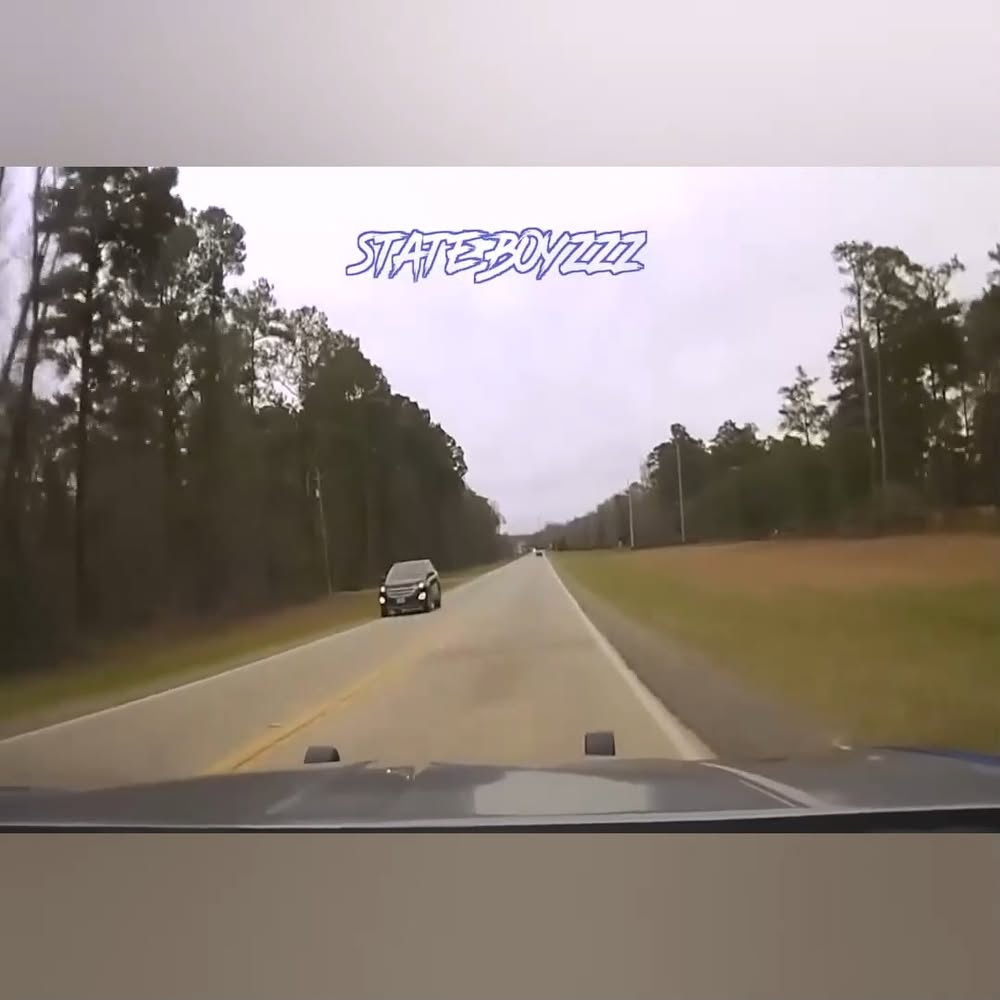
Breaking News: Talent Express on Reels
Welcome to our latest coverage on Talent Express on Reels. This topic has been trending across social media platforms and sparking conversations worldwide.
In this report, we break down the key details, analyze the footage, and provide you with everything you need to know about this developing story.
✨ Key Highlights
- Viral Content: Experience the moment everyone is talking about regarding Talent Express on Reels.
- In-Depth Analysis: A closer look at the details you might have missed.
- Global Impact: How this event is resonating with audiences everywhere.
- Expert Opinions: Insights and reactions from the community.
📊 Detailed Report
Beyond the headlines, this video offers a unique perspective that clarifies the context of the situation. The footage speaks for itself, capturing specific moments that define the narrative.
Observers have noted the significance of these events. Whether you are following this story closely or just tuning in, the video above provides the most accurate visual representation available.
❓ Frequently Asked Questions
1. What is the main focus of this video?
The video focuses on the core events surrounding the title topic, offering real-time footage and context.
2. Where can I find more updates?
Stay tuned to our website for follow-up reports and detailed analysis as this story unfolds.
🎯 Conclusion
We hope this report on Talent Express on Reels has kept you informed. Information is power, and staying updated with accurate visuals is more important than ever.
Thank you for reading. Don’t forget to share this article and leave your thoughts in the comments below!
Born on the Track, Built for the Road: 10 Production Cars with Motorsport DNA
For a decade, I’ve witnessed firsthand the electrifying synergy between motorsport and the automotive industry. It’s not merely about aesthetics or subtle performance enhancements; it’s about harnessing the raw, untamed spirit of racing engines and transplanting them into vehicles that grace our public roads. These powerhouses, forged in the crucible of intense competition, offer an unparalleled connection to their racing brethren, delivering a high-revving, adrenaline-fueled experience that’s nothing short of exhilarating.
This deep dive explores ten production vehicles that masterfully bridge the chasm between the race circuit and everyday driving. From the piercing wail of V12s to the guttural roar of turbocharged behemoths, these machines provide a tangible taste of motorsport prowess. But before we unleash this list, it’s crucial to understand why manufacturers invest colossal sums in the world of racing and, more importantly, how that dedication translates into the vehicles we can actually own and drive. This exploration into cars with race car engines is more than just a nostalgic look back; it’s an examination of engineering evolution.
The Symbiotic Relationship: Motorsport’s Influence on Road-Going Vehicles
The entanglement of motorsport and production cars is as old as the automobile itself. Racing serves as the ultimate proving ground, a high-stakes arena where engineers push the boundaries of vehicular capability and component resilience under conditions where failure is not an option. The innovations, the lessons learned, and the breakthroughs achieved on the track invariably find their way into the cars that ferry us to work, to our families, and on our weekend adventures. Whether it’s the sophisticated dance of advanced aerodynamics, the strategic use of lightweight materials, or the direct trickle-down of cutting-edge engine technology, the relentless pursuit of speed and efficiency in racing fundamentally shapes the cars we drive today. This automotive engineering heritage is a testament to continuous improvement.
Consider, for instance, the ubiquitous nature of disc brakes and the seamless operation of paddle shifters – technologies that were once the exclusive domain of racing circuits before becoming standard features on a vast array of production vehicles. Beyond technological advancements, motorsport success serves as a potent brand amplifier. When a manufacturer’s race cars dominate the podium, the allure and desirability of their road-going counterparts naturally skyrocket. While few of us will ever pilot a Formula 1 machine or a Le Mans prototype, the profound emotional connection is palpable, particularly when the throaty symphony of a race-bred engine vibrates beneath the hood. This motorsport-derived technology in cars truly democratizes performance.
The “Win on Sunday, Sell on Monday” ethos, a long-standing mantra in the automotive world, is experiencing a significant resurgence. We are witnessing an unprecedented wave of original equipment manufacturer (OEM) entries into various racing disciplines, a development that could very well represent the most significant boon to the automotive industry in decades. This renewed commitment fuels the creation of performance cars with racing heritage.
A Glimpse into the Pantheon: Production Cars with True Racing Hearts
Let’s delve into the machines that embody this spirit of competition, showcasing ten production vehicles that offer an unfiltered taste of racing DNA:
Alfa Romeo Montreal: The V8 Echo from endurance racing
The Alfa Romeo Montreal, a car that possesses an undeniable allure, houses a 2.6-liter V8 engine that traces its lineage directly back to Alfa Romeo’s formidable Tipo 33 sports prototype. This endurance racer carved its name in legendary events like the Targa Florio and the grueling 24 Hours of Daytona. While meticulously detuned for the demands of public roads, the engine in the Montreal retains a significant portion of its motorsport character. It eagerly spins up to 7,000 RPM, delivering a spirited 200 horsepower. The intoxicating symphony of its V8, combined with its strikingly sharp design, firmly establishes the Montreal as one of the most compelling and regrettably underrated vehicles ever to wear the Alfa Romeo badge. This is a prime example of V8 engines from racing in production cars.
BMW M1, M3 (E30), M5 (E28), M6 (E24): The Quintessential Motorsport Lineage
BMW’s profound racing pedigree is indelibly etched into the DNA of its most iconic models. The BMW M1 stands as a monumental achievement, powered by the 3.5-liter inline-six M88 engine. This powerplant was a direct beneficiary of the brand’s intensive racing programs, most notably finding its competitive spirit in the BMW M1 ProCar series. This same potent engine would later find its way into the E24 M6 and the E28 M5, cementing their legendary status. Concurrently, the four-cylinder S14 engine that propelled the E30 M3 was meticulously engineered with inspiration drawn from the M88 and the turbocharged F1 engines from the M12 series. Its design philosophy was deeply rooted in BMW’s dominance in touring car racing, sharing critical components and engineering principles with the machines that conquered the DTM series. These models are the epitome of BMW M performance heritage.
Chevrolet Camaro ZL1 (1969): The American Muscle Car’s Racing Heart
The 1969 Chevrolet Camaro ZL1 was a formidable beast, equipped with a 427 cubic-inch (7.0-liter) V8 engine originally conceived for the brutal demands of Can-Am racing. Its all-aluminum construction bestowed a remarkable lightness for its displacement, and it unleashed a staggering amount of power. While officially rated at 430 horsepower for its road-going iteration, this engine was capable of a genuine 500 horsepower. The ZL1 package transformed the Camaro into a street-legal drag strip terror, and its potent engine continued to compete fiercely in the SCCA Trans-Am series. With a production run limited to a mere 69 units, the Camaro ZL1 remains an extraordinarily rare and highly coveted collector’s item today, a true icon of American muscle cars with race engines.
Ferrari Dino 206 GT: A V6 with Formula 2 Pedigree
The Ferrari Dino 206 GT graced the automotive landscape with a 2.0-liter V6 engine that possessed a remarkable origin story: it was initially developed for Ferrari’s Formula 2 racing endeavors in the 1960s. Despite being recalibrated for road use, the engine retained its penchant for high revs, imbuing the Dino with a spirited racing character that made it an absolute delight to maneuver through winding roads. Producing a respectable 180 horsepower, this output was more than adequate for a car that tipped the scales at just over 2,000 pounds. Notably, the Dino was one of the few Ferraris of its era that did not bear the iconic Prancing Horse badge, yet it marked the Italian marque’s pioneering foray into mid-engine V6 sports cars, setting a crucial precedent for future models. This represents a fascinating chapter in Ferrari’s racing-derived V6 engines.
Ferrari F50: Formula 1 Unleashed on the Street
The Ferrari F50, a breathtaking creation conceived to commemorate the legendary Italian marque’s 50th anniversary, elevates the concept of a track-derived engine to an entirely new stratospheric level. Its 4.7-liter V12 powerplant is a direct descendant of Ferrari’s 1990 Formula 1 contender, the Tipo 641 (later known as the F1-90), famously piloted by the legendary Alain Prost. This naturally aspirated marvel screams to an astonishing 8,500 RPM, generating a formidable 513 horsepower. It delivers the raw, unfiltered visceral sensation of an F1 car directly to the driver. With only minimal modifications implemented to comply with road regulations, the F50 represented the closest a street-legal Ferrari could get to Formula 1 at the time, a true testament to F1 engine technology in road cars.
Ford GT (2005 & 2017): A Modern Homage to Racing Legends
The Ford GT is far more than just a car; it’s a profound homage to one of the most legendary race cars in automotive history: the Le Mans-conquering Ford GT40. The 2005 iteration of the GT boasts a 5.4-liter supercharged V8 engine whose roots are deeply embedded in the development of the automaker’s endurance racing powerplants, sharing kinship with the engines employed in Ford’s Daytona Prototype race cars. Similarly, the more contemporary 2017 Ford GT continues this proud tradition of motorsport-inspired performance. It is propelled by a potent twin-turbocharged 3.5-liter V6, a derivative of Ford’s highly successful EcoBoost program, which has seen extensive application in endurance racing. This continuous evolution showcases Ford’s racing legacy in its supercars.
Jaguar XJ220: A Twin-Turbo V6 from Group C Glory
The Jaguar XJ220 stands as one of the most iconic vehicles ever to emerge from the esteemed British marque. Initially envisioned with a V12 engine, its destiny was ultimately shaped by a potent 3.5-liter twin-turbocharged V6 engine. This powerplant was directly sourced from the formidable Jaguar XJR-11 Group C race car. The competition-derived nature of this engine endowed the XJ220 with the remarkable ability to achieve a top speed of 217 mph, briefly crowning it the fastest production car in the world. The engine powering the XJ220 was undoubtedly one of the most advanced and track-proven powertrains ever to find its way into a road-legal automobile, a pinnacle of Group C racing technology in production cars.
Plymouth Belvedere (1964): The “Race Hemi” Legend
At first glance, the 1964 Plymouth Belvedere might not immediately strike one as a race car. However, beneath its unassuming exterior lay the legendary 426 Hemi V8 engine, a powerplant meticulously developed with NASCAR dominance firmly in mind. Affectionately known as the “Race Hemi,” this engine was an unstoppable force on the track, and its formidable power soon found its way into Plymouth’s production lineup. The road-going Belvedere, delivering a formidable 425 horsepower, rapidly ascended to become one of the most powerful muscle cars of the 1960s – a reputation the brand artfully carried forward into the 1970s with its iconic ‘Cuda. This is a prime example of NASCAR engine technology in muscle cars.
Porsche 918 Spyder: Hybrid Powerhouse with RS Spyder Roots
The Porsche 918 Spyder’s 4.6-liter V8 engine draws its fundamental architecture from the RS Spyder, a sophisticated prototype race car that fiercely competed in the LMP2 class at the legendary 24 Hours of Le Mans. The 918 masterfully integrates this competition-derived engine with advanced electric motors, culminating in a staggering combined output of 887 horsepower. This phenomenal power allows the hypercar to achieve an astonishing 0 to 60 mph sprint in a mere 2.2 seconds (as confirmed by independent testing), positioning it among the quickest vehicles ever conceived. While the electric motors contribute significantly to its blistering performance, it is the race-derived V8 that provides the car’s visceral emotional and auditory thrills, a symphony of hybrid hypercars with racing engines.
Porsche Carrera GT: The Analog Supercar’s V10 Heart
The Porsche Carrera GT is widely revered as one of the greatest analog supercars ever constructed, and a significant portion of its legendary status is attributed to the ten-cylinder engine that propels it. The 5.7-liter V10 was initially conceived during the Formula 1 V10 era. However, after its Formula 1 aspirations didn’t materialize, the project was shelved, only to be later repurposed for a Le Mans prototype car that never officially saw track action. Instead, Porsche made the inspired decision to harness this race-bred engine for its flagship supercar. This allowed the Carrera GT to unleash a potent 612 horsepower and rev with exhilarating freedom all the way to 8,000 RPM. Combined with its minimalist lightweight construction and unwavering motorsport DNA, the Carrera GT continues to stand as one of the most challenging and rewarding supercars to master, representing the zenith of Porsche’s V10 supercar engineering.
These ten machines are more than just automobiles; they are rolling testaments to the enduring power of motorsport. They represent a tangible link to the world of racing, offering enthusiasts a chance to experience the thrill and engineering prowess honed on the world’s most demanding circuits.
Are you captivated by the engineering marvels born from the race track? Discover how these performance automotive innovations can enhance your driving experience, or explore exceptional track-inspired sports cars for sale that might just be your next dream machine.