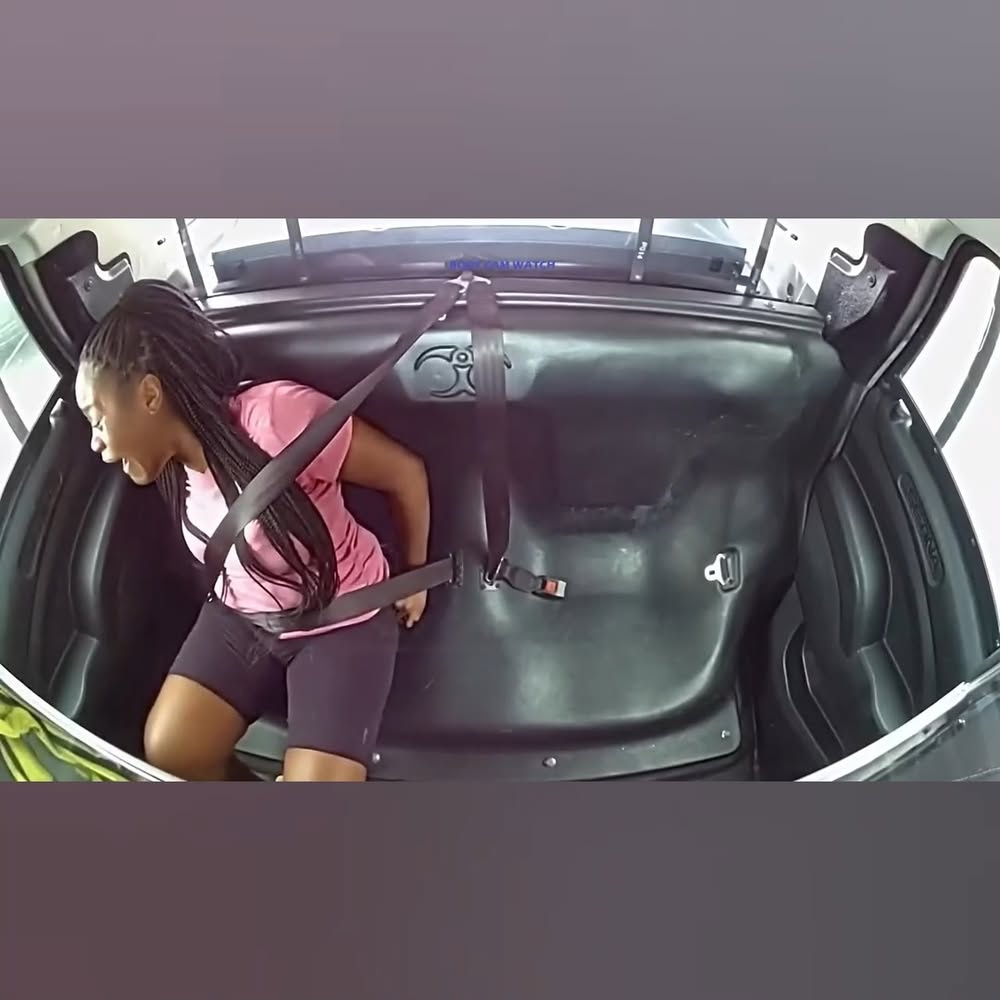



Breaking News: Talent Frontier on Reels
Welcome to our latest coverage on Talent Frontier on Reels. This topic has been trending across social media platforms and sparking conversations worldwide.
In this report, we break down the key details, analyze the footage, and provide you with everything you need to know about this developing story.
✨ Key Highlights
- Viral Content: Experience the moment everyone is talking about regarding Talent Frontier on Reels.
- In-Depth Analysis: A closer look at the details you might have missed.
- Global Impact: How this event is resonating with audiences everywhere.
- Expert Opinions: Insights and reactions from the community.
📊 Detailed Report
Beyond the headlines, this video offers a unique perspective that clarifies the context of the situation. The footage speaks for itself, capturing specific moments that define the narrative.
Observers have noted the significance of these events. Whether you are following this story closely or just tuning in, the video above provides the most accurate visual representation available.
❓ Frequently Asked Questions
1. What is the main focus of this video?
The video focuses on the core events surrounding the title topic, offering real-time footage and context.
2. Where can I find more updates?
Stay tuned to our website for follow-up reports and detailed analysis as this story unfolds.
🎯 Conclusion
We hope this report on Talent Frontier on Reels has kept you informed. Information is power, and staying updated with accurate visuals is more important than ever.
Thank you for reading. Don’t forget to share this article and leave your thoughts in the comments below!
Unleashing the Track on the Street: 10 Production Cars Fueled by Motorsport DNA
For a decade, I’ve navigated the intricate world of automotive engineering, witnessing firsthand how the crucible of motorsport continuously refines the vehicles we drive daily. There’s an undeniable allure, a visceral connection, when a production car boasts an engine originally conceived for the relentless demands of the racetrack. These aren’t mere aesthetic nods to racing; they are powertrains forged in the heat of competition, delivering a potent blend of high-revving excitement and unadulterated performance that directly translates the spirit of motorsport to public roads.
This article delves into ten exceptional production automobiles that masterfully bridge the chasm between the circuit and the street. From the operatic wail of naturally aspirated V12s to the relentless surge of turbocharged powerplants, these vehicles offer a tangible taste of motorsport prowess to the everyday driver. But before we explore these automotive marvels, it’s crucial to understand why manufacturers invest heavily in the costly and demanding arena of motorsport, and how this dedication ultimately benefits the consumer.
The Symbiotic Dance: Motorsport DNA in Road-Going Vehicles
The relationship between motorsport and road car development is not merely symbiotic; it’s a fundamental engine of automotive progress. Racing circuits are the ultimate proving grounds, pushing engineering boundaries under extreme stress where compromise is not an option. Every triumph and every failure on the track provides invaluable data, informing innovations that invariably trickle down to the vehicles we encounter on our daily commutes. This constant cycle of refinement yields advancements in areas such as sophisticated aerodynamic designs, the strategic use of lightweight materials, and the progressive refinement of engine technology. The very essence of what makes a better road car is often born from the fires of competitive racing.
Consider the ubiquitous nature of disc brakes and paddle shifters – technologies that were once exclusive to the racetrack, now standard features in many modern production vehicles. Beyond tangible engineering benefits, motorsport success serves as a powerful brand accelerant. When a manufacturer’s racing machines consistently dominate their respective disciplines, it imbues their entire product line with an aura of desirability and performance credibility. While the dream of owning a Formula 1 car or a Le Mans prototype remains out of reach for most, the thrill of experiencing a race-bred engine roaring beneath the hood offers a profound connection to the world of professional racing, making that dream feel remarkably closer. The strategic approach of “win on Sunday, sell on Monday” is experiencing a significant resurgence, signaling a potentially transformative era for the automotive industry.
Unveiling the Legends: 10 Production Cars Steeped in Racing Pedigree
Alfa Romeo Montreal: The V8’s Underrated Symphony
The Alfa Romeo Montreal is a testament to Italian passion and engineering ingenuity. At its heart lies the Tipo 33 naturally aspirated V8 engine, a powerhouse originally conceived for Alfa Romeo’s formidable Tipo 33 sports prototype. This endurance racer bravely tackled legendary events like the Targa Florio and the grueling 24 Hours of Daytona. While meticulously detuned for street legality and drivability, the Montreal’s V8 retains a significant portion of its motorsport character. It willingly spins to an exhilarating 7,000 RPM, producing a spirited 200 horsepower. The evocative roar of this V8, combined with its strikingly avant-garde styling, firmly established the Montreal as one of the most captivating and criminally underrated automobiles to ever bear Alfa Romeo’s distinguished badge. This classic often captivates enthusiasts seeking unique Italian performance cars.
BMW M Cars (M1, E30 M3, E28 M5, E24 M6): The Ultimate Driving Machine’s Racing Roots
BMW’s M division, synonymous with performance, has consistently infused its production cars with uncompromising motorsport DNA. The legendary BMW M1 stands as a prime example, powered by the formidable M88 3.5-liter inline-six engine. This powerplant was directly derived from BMW’s highly successful racing programs, notably finding application in the electrifying M1 ProCar series. The same potent engine later found its way into the E24 M6 and the E28 M5, cementing their status as automotive icons. Meanwhile, the four-cylinder S14 engine nestled within the E30 M3 also drew heavily from the M88 and the turbocharged M12 Formula 1 engines. This strategic engineering approach ensured that the E30 M3 shared critical components and engineering principles with the dominant touring cars of the Deutsche Tourenwagen Meisterschaft (DTM) series, a testament to BMW’s commitment to performance across multiple racing disciplines. For those searching for high-performance European sedans or coupes, the legacy of these M cars is undeniable.
Chevrolet Camaro ZL1 (1969): A Can-Am Beast Unleashed
The 1969 Chevrolet Camaro ZL1 was no ordinary muscle car; it was a street-legal homologation special that brought a Can-Am racing engine to the masses. Under its hood resided the legendary 427 cubic-inch (7.0-liter) V8, an all-aluminum masterpiece originally engineered for the demanding world of Can-Am racing. This innovative construction made the engine remarkably lightweight for its displacement, unleashing staggering power. While officially rated at 430 horsepower for street use, its true output was closer to a formidable 500 hp. The ZL1 package transformed the Camaro into a drag strip annihilator, with its race-bred engine finding further application in SCCA Trans-Am series race cars. With a production run of just 69 units, the 1969 Camaro ZL1 remains an exceptionally rare and highly coveted collector’s item, representing a pinnacle of American muscle car engineering. Finding vintage performance cars with such a pedigree is a significant undertaking for collectors.
Ferrari Dino 206 GT: A Taste of F2 Performance
The Ferrari Dino 206 GT, though distinct from its V12 brethren in its badge and engine configuration, offered a captivating glimpse into Ferrari’s racing aspirations. It was powered by a 2.0-liter naturally aspirated V6 engine originally developed for Ferrari’s Formula 2 racing endeavors in the 1960s. While carefully calibrated for road use, this powerplant retained its high-revving character, imbuing the Dino with a distinctly sporting soul that made it an absolute joy to navigate on winding country roads. Producing a respectable 180 horsepower, it was more than adequate for a car weighing just over 2,000 pounds. The Dino also marked a pivotal moment for the Italian marque, being one of the few Ferraris of its era not to carry the iconic Prancing Horse badge, and it represented Ferrari’s inaugural foray into mid-engine V6 sports cars, laying the groundwork for future performance models. Enthusiasts of rare Ferraris often seek out these early V6 models.
Ferrari F50: Formula 1 on the Road
To commemorate its 50th anniversary, Ferrari unleashed the F50, a production car that took the concept of a track-derived engine to an entirely new echelon. Its heart was a potent 4.7-liter naturally aspirated V12, the Tipo F130B, which was a direct descendant of the engine powering the legendary 1990 Formula 1 car, the Tipo 641 (also known as the F1-90), piloted by none other than Alain Prost. This naturally aspirated marvel sang to an astonishing 8,500 RPM, delivering a thrilling 513 horsepower. The F50 offered an unfiltered, raw experience akin to driving an actual Formula 1 car on public roads. With minimal modifications necessary to meet road regulations, the F50 represented the closest approximation to Formula 1 performance that Ferrari had ever offered in a street-legal vehicle. The pursuit of hypercars with genuine F1 engine heritage remains a significant draw for the most discerning collectors.
Ford GT (2005 & 2017): A Homage to Le Mans Glory
The Ford GT is a modern-day tribute to one of motorsport’s most legendary machines: the Le Mans-winning Ford GT40. The 2005 iteration of the GT was propelled by a 5.4-liter supercharged V8, its lineage deeply rooted in the development of Ford’s endurance racing engines, bearing a strong connection to the powerplants used in Ford’s Daytona Prototype race cars. Similarly, the more recent 2017 Ford GT continues this legacy, boasting track-inspired performance from its twin-turbocharged 3.5-liter EcoBoost V6. This engine itself is a product of Ford’s extensive experience in endurance racing, underscoring the brand’s unwavering commitment to competitive motorsport. The Ford GT continues to be a highly sought-after American supercar, especially for those appreciating its motorsport heritage and track-ready capabilities. The allure of American-made supercars with race pedigree is immense.
Jaguar XJ220: The Twin-Turbocharged Legend
The Jaguar XJ220 stands as an iconic symbol of British automotive excellence, pushing the boundaries of performance. While initially conceived with a V12 engine, the production model ultimately received a potent 3.5-liter twin-turbocharged V6, directly sourced from Jaguar’s formidable XJR-11 Group C race car. This competition-derived engine was instrumental in propelling the XJ220 to a staggering top speed of 217 mph, earning it the distinction of being the world’s fastest production car for a significant period. The XJ220’s powerplant was a prime example of cutting-edge, track-proven technology seamlessly integrated into a road-going vehicle, a remarkable feat of engineering for its time. The scarcity and performance of the XJ220 make it a highly desirable classic sports car for collectors. Exploring rare European sports cars often leads to this exceptional Jaguar.
Plymouth Belvedere (1964): The Race Hemi Unleashed
While the 1964 Plymouth Belvedere might not immediately evoke images of a dedicated race car, beneath its unassuming exterior beat the legendary 426 Hemi V8, an engine meticulously developed for the brutal world of NASCAR. Dubbed the “Race Hemi,” this powerplant became a dominant force on the stock car circuit before making its triumphant debut in Plymouth’s production lineup. The road-going Belvedere, delivering a formidable 425 horsepower, rapidly ascended to become one of the most powerful American muscle cars of the 1960s, a reputation that the brand expertly carried through the 1970s with its iconic ‘Cuda models. The historical significance of the Hemi engine in American automotive culture, particularly its racing origins, is undeniable. For enthusiasts of vintage American muscle cars, the Belvedere with the Hemi remains a highly desirable find.
Porsche 918 Spyder: Hybrid Power with a Racing Heart
The Porsche 918 Spyder represents a groundbreaking fusion of hybrid technology and pure motorsport DNA. Its 4.6-liter naturally aspirated V8 engine is directly inspired by the RS Spyder, a formidable prototype race car that competed with distinction in the LMP2 class at the legendary 24 Hours of Le Mans. The 918 Spyder masterfully integrates this race-derived V8 with advanced electric motors, generating a colossal combined output of 887 horsepower. This potent synergy enables the hypercar to catapult from 0 to 60 mph in a blistering 2.2 seconds (as confirmed by independent testing), positioning it among the quickest production cars ever created. While the electric motors contribute significantly to its performance, it is the soul-stirring resonance of the race-derived V8 that truly defines the car’s emotional and auditory appeal. The quest for groundbreaking hybrid hypercars with significant motorsport provenance is a growing trend in the collector market.
Porsche Carrera GT: The Analog Supercar’s V10 Soul
The Porsche Carrera GT is frequently lauded as one of the greatest analog supercars ever engineered, and a significant portion of its legendary status is attributed to its breathtaking 10-cylinder engine. The 5.7-liter V10 was initially developed for Formula 1 during the V10 era, a project that ultimately did not materialize. It was subsequently shelved and later repurposed for a Le Mans prototype that never saw competitive action. Instead, Porsche made the inspired decision to transplant this race-honed engine into its flagship supercar. This allowed the Carrera GT to unleash a formidable 612 horsepower and a soaring redline of 8,000 RPM. Coupled with its lightweight construction and unwavering motorsport DNA, the Carrera GT remains one of the most engaging and challenging supercars to pilot, offering an uncompromised driving experience. The demand for pure, driver-focused supercars with racing lineage continues to drive the market for vehicles like the Carrera GT.
Embark on Your Own Motorsport Journey
The allure of driving a machine that has been influenced, or even directly spawned, from the intense world of motorsport is undeniable. These vehicles offer more than just transportation; they provide a direct conduit to the passion, innovation, and raw performance that define competitive racing.
If the spirit of the track calls to you, and you’re seeking an automotive experience that transcends the ordinary, explore the incredible world of production cars with genuine motorsport DNA. Whether you dream of the symphony of a V12 or the raw power of a turbocharged V8, there’s a race-bred machine waiting to ignite your driving passion. Discover your next thrill by exploring dealerships specializing in performance and classic automobiles, or connect with automotive brokers who can help you find these exceptional vehicles.